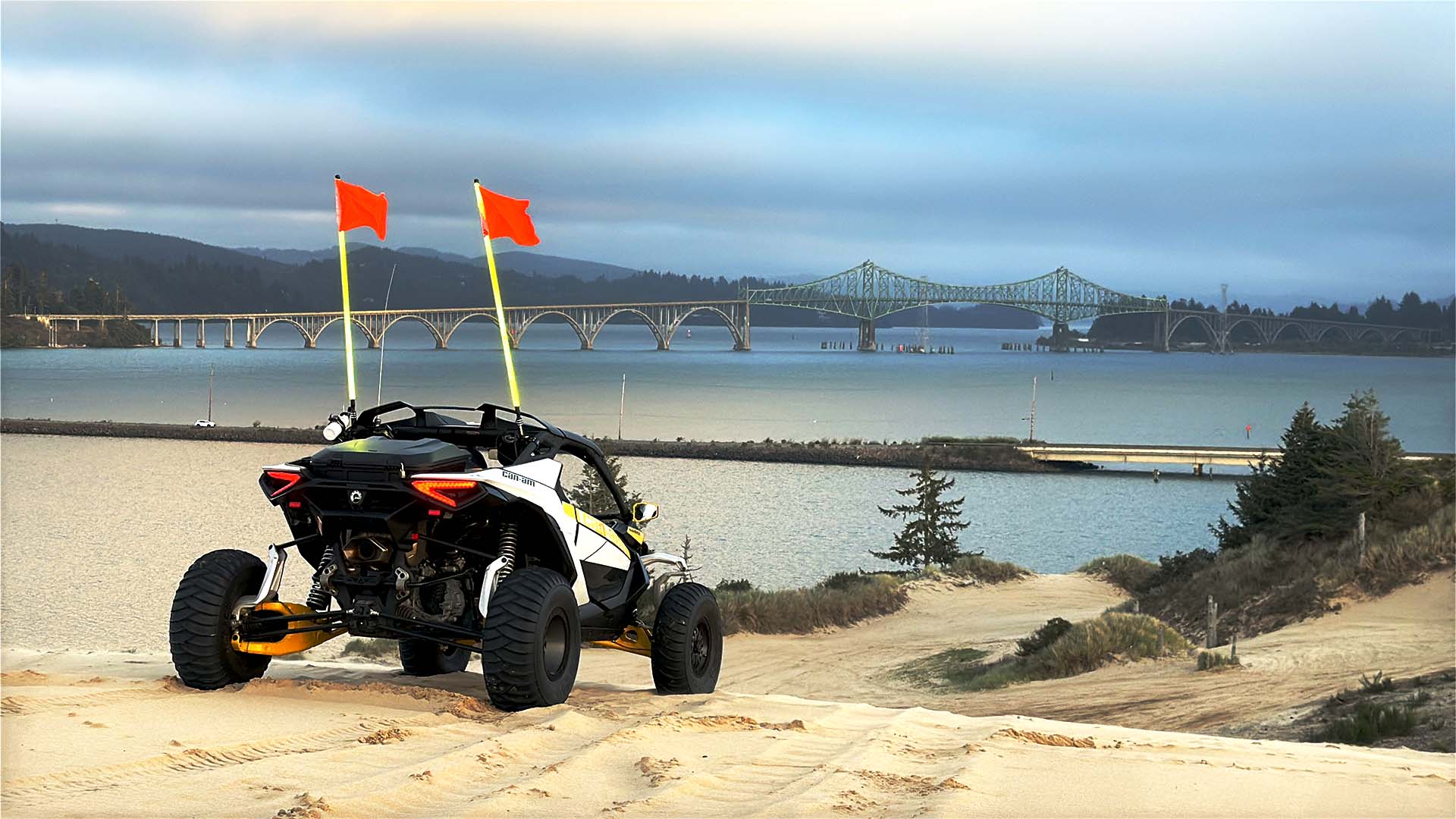
Oregon Dunes Appeal: We Asked the Ninth Circuit to Lift the Umpqua Dunes Curfew and Closures
Today, November 18, 2026, the Brass Legal Center at BlueRibbon Coalition filed its opening brief in the U.S. Court of Appeals for the Ninth Circuit. We are asking the court to throw out the restrictions a federal judge placed on the Oregon Dunes National Recreation Area in August. These restrictions include a nightly riding curfew in the Umpqua Dunes and roped-off closures at both Banshee Hill and the southwestern edge of the Umpqua Dunes. As written, those restrictions have no end date.
We filed on behalf of Save the Riders Dunes, jointly with Carollo Law Group of Roseburg, Oregon who is representing Douglas County, and Coos County. The case is Center for Biological Diversity v. U.S. Forest Service, Ninth Circuit No. 26-6289. An opening brief is our written argument to the appeals court, and it sets the terms of the fight from here. Read the full brief here.
How we got here
The Center for Biological Diversity sued the Forest Service in June 2024, citing the need to prevent alleged harm to the coastal marten, a small member of the weasel family. The U.S. Fish and Wildlife Service listed the marten as threatened in 2020. In 2024 it designated 28,843 acres of the recreation area as marten critical habitat, out of roughly 28,900 acres total.
On August 9, 2026, Judge Ann Aiken of the U.S. District Court in Eugene ruled for the Center for Biological Diversity on all four of its claims. The next day she granted a preliminary injunction, which is a temporary court order that applies while a case continues. It requires:
- A nightly riding curfew from 10:30 p.m. to 6:00 a.m. in the Middle Riding Area, the Umpqua Dunes.
- Closure of Banshee Hill and the southwestern edge of the Umpqua Dunes, with rope fencing and signs.
- Trail cameras at the closed areas through August 17, with the footage handed to the Center for Biological Diversity.
- Daily monitoring of the closed areas, signs, ropes, and cameras.
The Center for Biological Diversity asked for those measures “only for the upcoming UTV Takeover,” the Winchester Bay event held August 11 through 16 on Douglas County land. The cameras ended with the event. The curfew and closures did not. They stay in place until the court decides on what it calls “longer-term interim measures.”
The Umpqua Dunes have been the only part of the Oregon Dunes open to riding around the clock since 1994. The Forest Service chose that area in its 1994 Dunes Plan because it sits farthest from other visitors and nearby homes, and it made that choice after hearing from the Confederated Tribes of Coos, Lower Umpqua and Siuslaw Indians and from the communities of Florence and Reedsport. The Center for Biological Diversity’s lawsuit never challenged that plan.
What we argued
The Center for Biological Diversity asked for six days of restrictions tied to one event. Why are riders still under a curfew in November? Our brief gives the Ninth Circuit three reasons the order cannot stand.
The order reaches beyond the case. The only claim behind it is procedural. The Center for Biological Diversity argues the Forest Service should have restarted Endangered Species Act consultation, the formal check-in with the Fish and Wildlife Service, on whether the 2015 Designated Routes Project could affect the Coastal Marten. That project moved 518 acres, 1.7 percent of the recreation area, into open riding and extended the deadline to designate 2.3 miles of routes. It did not change riding hours. Night riding in the Umpqua Dunes comes from the 1994 plan, and the district court had already ordered consultation the day before it issued the injunction. Our brief argues a court cannot use a claim about a 2015 project to rewrite riding hours set by a 1994 plan that no one challenged. It also argues the court set details the law leaves to the land agency, down to curfew hours, camera placement, and the size of the signs.
The Center for Biological Diversity did not prove harm. A party asking for an injunction must show that harm that cannot be undone is likely, not merely possible. The Fish and Wildlife Service itself wrote that it “did not identify OHV activities as a threat to the coastal marten.” The record contains no confirmed case of an off-highway vehicle striking a marten. The only recorded vehicle death of a marten in the recreation area happened in 2016, on a road in an area already closed to OHVs. The Center for Biological Diversity withdrew an earlier injunction request in August 2025, sought no relief against the 2026 Northwest Raptor Rally in May or the Coos Bay UTV Takeover in June, and filed this request 14 days before the Winchester Bay event, which was no more than a quarter the size of the Coos Bay event. Our brief argues that the record cannot support restrictions with no end date. It also points out that federal law gives the Forest Service until June 28, 2029, to complete this kind of consultation on a forest plan amendment, which the 2015 project was.
Nobody can tell where the closures are. Federal court rules require an injunction to spell out, in the order itself, exactly what it restricts. This order defines the closed areas by pointing to a map in the Center for Biological Diversity’s motion. On that map, Banshee Hill appears only as a proposed trail camera location. The order also requires no public notice of where and when riding is prohibited, which leaves riders, nearby landowners, and local law enforcement to guess.
What this means for access
- The curfew and closures are in effect today. Filing a brief does not lift them. Until a court changes them, follow them.
- This appeal covers the preliminary injunction only. The August 9 ruling, which also blocks Forest Service permits for commercial OHV events on the recreation area until consultation and environmental review are complete, is not before the Ninth Circuit yet. We have preserved the right to challenge that ruling once the district court enters a final judgment.
- If the Ninth Circuit agrees with us, the curfew and closures come off, and the Umpqua Dunes return to the 24-hour riding the 1994 Dunes Plan allows, subject to anything else the district court orders.
What happens next
- The Center for Biological Diversity files its answering brief. Appeals of injunctions move on a faster track than ordinary appeals, and under the Ninth Circuit’s rules that brief is due no later than December 21, 2026.
- We then file a reply brief, due within 21 days after we receive theirs.
- In Eugene, Judge Aiken is deciding what longer-term interim measures, if any, should apply on the dunes. Briefing on that question closed November 4. Her decision could change the rules on the ground before the Ninth Circuit rules.
- We will post each filing and each ruling on this page as it happens.
This brief runs 46 pages, and every argument in it rests on the record: the Forest Service’s own 1994 decision, the Fish and Wildlife Service’s own findings, and the Center for Biological Diversity’s own words in court. BRC staff attorney Bella Eldridge filed it with Carollo Law Group. Your membership and your donations pay for that work.
Keep the Oregon Dunes open. Pacific Northwest Four Wheel Drive Association is matching gifts dollar for dollar— up to $20,000! Donate to the Oregon Dunes legal fight.
LEGAL ISSUES
Lawsuits & legal challenges
POLICY ISSUES
Regulations behind closures
OPERATION: ACCESSIBLE
Access for all
LATEST FIGHT
BRC Joins Fight for the Oregon Dunes
Learn about the case and how you keep riders on the Dunes.