
LITIGATION UPDATE: Tenth Circuit Gives BRC a Win on Antiquities Act Challenge • Press Release » | Tell Admin & Congress to Act! »
PROTECTING PUBLIC LAND ACCESS
Antiquities Act Abuse
How Presidents Are Locking Up Public Lands Without Congress
The Antiquities Act of 1906 authorizes presidents to designate national monuments on federal land, but requires that designations be limited to the smallest area necessary to protect specific objects. BlueRibbon Coalition is challenging modern proclamations that designate millions of acres of landscapes as unlawful under the Act.
25
Monuments 100K+ acres designated in last 30 years
13.9M +
Acres of land withdrawn from multiple use by EO in last 30 years
7
Lame-duck designations issued in final year of admin in last 30 years
11
TMP pending = more route closures still coming
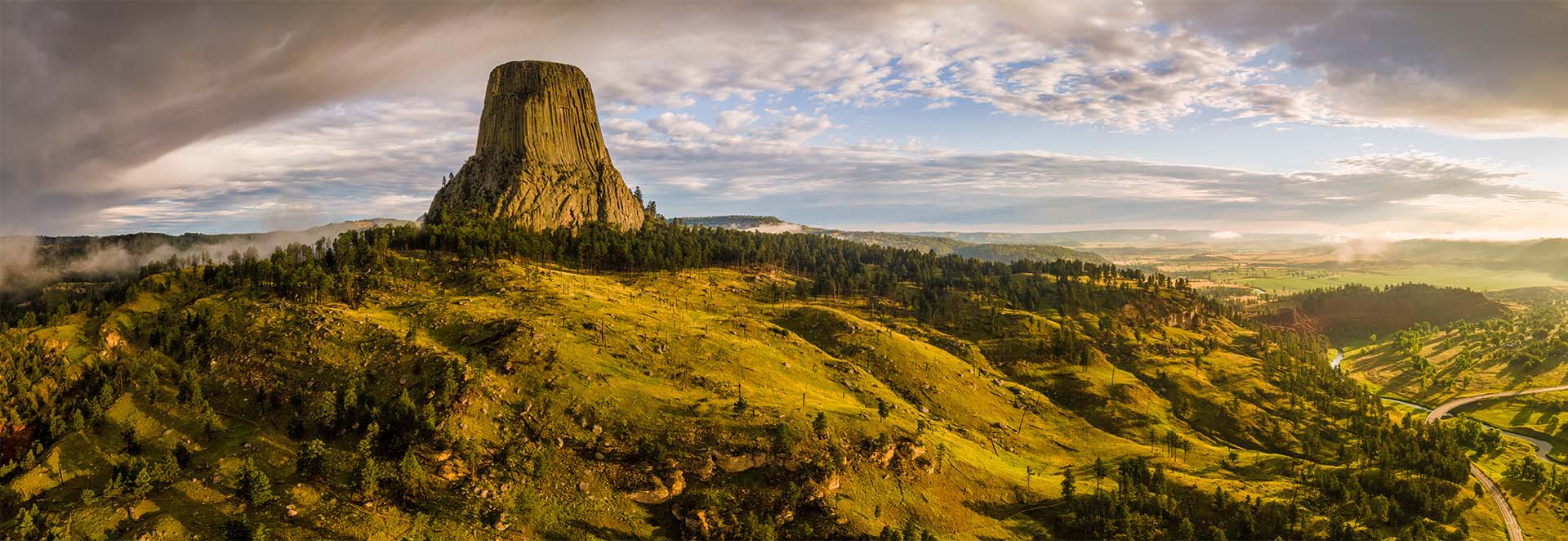
The first National Monument; Devils Tower; 1,152 acres; 1906.
THE PROBLEM
A Law Built for Ruins, Now Used Against Recreation
Congress passed the Antiquities Act in 1906 for a simple purpose: protecting prehistoric ruins and artifacts from looters in the American Southwest. It was carefully written to give the president authority to set aside only the "smallest area compatible with the proper care and management of the objects to be protected."
What Congress never intended was for that narrow tool to become a blank check. Over the following century, presidential proclamations grew from 160-acre archaeological sites to multi-million-acre region-wide designations — stripping miners of their claims, closing OHV trails, and dismantling the economies of rural communities — all without a single vote in Congress.
When President Biden designated Grand Staircase-Escalante (1.87 million acres), Bears Ears (1.36 million acres), and the Chuckwalla National Monument (624,000 acres) — he didn't just push the limits. He rewrote them, declaring entire landscapes, ecosystems, habitats, and animal species to be protectable "objects" under the Act. As Chief Justice Roberts warned: these proclamations transform presidential discretion into "a power without any discernible limit."
"The bill proposes to create small reservations reserving only so much land as may be absolutely necessary for the preservation of these interesting relics of prehistoric times."
— House Report, Antiquities Act, 1906
BRC believes the courts must enforce the plain text of the law. We're not waiting for that to happen. We're making it happen.
ORIGINAL INTENT
"...to declare by public proclamation historic landmarks, historic and prehistoric structures, and other objects of historic or scientific interest... to be national monuments, and may reserve as a part thereof parcels of land, the limits of which in all cases shall be confined to the smallest area compatible..."
Antiquities Act of 1906; Act of June 8, 1906, ch. 3060, § 2, 34 Stat. 225
MODERN HISTORY OF ABUSE
13.9 Million Acres, Three Presidents, One Direction
The original language of the Act is one thing. But the trend line of Antiquities Act designations further reveals presidential abuse. The below chart respresents every terrestrial Antiquities Act designation, reduction, and restoration over the last 50 years. But why did we start at 1976?
Pre-1976 Designations
Before 1976, the Antiquities Act was one of the few tools available to protect federal public lands. But even then, presidents respected its statutory intent: protecting small, site-specific objects. Devils Tower (Roosevelt, 1906) was 1,152 acres. El Morro (Roosevelt, 1906) was 160 acres. Aztec Ruins (Harding, 1923) was 25 acres. Even the largest pre-1996 designations were eventually elevated to national park status by Congressional vote. The Act functioned exactly as written: protection for ruins, artifacts, geological features, and historic landmarks.
Modern Era Protections
Through the 1960s and 1970s, Congress built a comprehensive framework for protecting public lands. NEPA (1969) required environmental review of major federal actions. The Endangered Species Act (1973) protected species and habitat. FLPMA (1976) gave BLM a multiple-use mandate, public-input requirements, and resource management planning. The National Forest Management Act (1976) did the same for the U.S. Forest Service. The Clean Air Act, Clean Water Act, Wild and Scenic Rivers Act, and many others layered additional protections on top. And most importantly, the Archaeological Resources Protection Act (1979) created additional protections for cultural resources with real enforcement teeth and penalties.
By 1976, federal public lands had robust, congressionally-authorized, publicly-accountable protective frameworks. The Antiquities Act has the narrowest statutory scope of any modern public lands tool, and the lowest democratic threshold. A president can use it without a single vote, hearing, or public comment period.
Modern Era Abuse
Starting in 1979 not a single acre was designated under the Antiquties Act until 1996. Clinton's Grand Staircase-Escalante designation changed that. 1.7 million acres of BLM multiple-use land was now deemed a monument. This marked the beginning of the modern era of Antiquities Act abuse where landscapes, ecosystems, and entire regions could be declared "objects" under a law written to protect cliff dwellings and pueblo ruins. Every large designation since has followed that template functioning as de facto Wilderness designations on the grandest of scales.
That categorical break is the abuse pattern.
Every landscape designated as a million-acre national monument since 1996 was already protected through congressionally-authorized planning processes and regulations. The Antiquities Act became a tool once again— not because other tools or protections were nonexistant— but because it was a tool that could side-step Congress and could lock up large swaths of land as defacto Wilderness without public accountability.
This chart starts in 1976 because that is when the legal landscape changed. Every designation shown here could have been pursued through congressionally-authorized planning processes. That is the abuse pattern. For a more detailed look at the timeline of presidential abuse in the modern era, jump to our table below.
12M
Pre-1976 acres — most validated by Congress
The 12 million acres designated under the Antiquities Act between 1906 and 1975 respected its statutory intent. The Act was one of the few protections for public lands. Most were later elevated to National Park status by Congressional vote. Public's representatives had a say.
20 years
Of total restraint, 1976–1995
Carter's 1978 Alaska designations (56M acres) were reversed by Congress via ANILCA in 1980. After that correction, nearly 20 years went by without issuing a single Antiquities Act proclamation. The modern designation pattern is a 30-year deviation, not historical norm.
82%
Of all acreage from Clinton + Obama
Two presidents account for 11.4M of the 13.9M acres on this chart. Both used the Act most aggressively in their final months in office, with no legislative process and no Congressional vote.
1
President has ever reduced monuments
In 50 years, Trump 2017 is the only time a president has used the Antiquities Act to shrink a monument. The 2.03M-acre reduction was fully undone by Biden four years later.
How To Read This Chart
Cumulative Total (default): Single running total of all monument acreage in force across the U.S. at any moment in time. Goes up at each designation, down at each reduction, back up at each restoration.
All Presidents Compared: Four overlaid lines showing each president's individual contribution. Trump appears as a downward line representing the 2017 reductions; all other presidents show upward additions.
Individual president filters: Isolate one president's cumulative contribution. Useful for showing the scale and timing of a single administration's actions.
Source data: Federal Register presidential proclamations, BLM National Conservation Lands, USFS national monument records. Acreage reflects proclamation acreage with adjustments for boundary modifications. Excludes marine monuments and Carter's 1978 Alaska designations.
TIMELINE
BlueRibbon Coalition Steps In To Lead the Fight
The modern monument crisis didn't happen overnight. It's the result of decades of presidential overreach, each administration pushing the Act's limits a little further. Below is an abreviated timeline to showcase when BRC took the lead to fight back against Antiquities Act abuse.
Congress passes the Act targeting protection of ancient Pueblo ruins. Devils Tower becomes the first monument at 1,153 acres. The legislative record is explicit: these are to be small reservations around specific objects.
President Clinton designates the largest land monument in the continental U.S. at the time, without consulting Utah's congressional delegation. Internal documents later reveal the "driving force" was a political decision made ahead of the 1996 election.
In a lame-duck move, President Obama designates Bears Ears as a national monument, drawing immediate opposition from the State of Utah, local communities, and landowners who had been working toward a bipartisan legislative solution.
After extensive consultation with local stakeholders, President Trump reduces Grand Staircase-Escalante by 860,000 acres and Bears Ears by 1.2 million acres, restoring multiple-use management and reopening trails and mining claims.
President Biden restores and expands both monuments on the unprecedented legal theory that entire landscapes are themselves protectable "objects." BRC joins Garfield County, Kane County, and the State of Utah in challenging the proclamations in federal court.
One of the final acts of the Biden administration: designating 624,000 acres of the California desert as the Chuckwalla National Monument, locking out miners with generational ties to the land and closing unrecorded trails to recreationists. BRC files a new challenge in Michigan federal court.
BlueRibbon Coalition in Court
Two Antiquities Act Cases. One Principle: Access Matters.
BlueRibbon Coalition is a plaintiff in two active federal cases challenging presidential overreach under the Antiquities Act. We are fighting for the plain meaning of the law — and for the people the monuments have harmed.

D. Utah · Lead Case No. 4:22-cv-00059
Garfield County v. Biden
Bears Ears & Grand Staircase-Escalante
BRC joined Garfield County, Kane County, the State of Utah, ranchers, miners, and Ute Mountain Ute tribal members in challenging President Biden's 2021 proclamations expanding both monuments to a combined 3.23 million acres.
The complaints allege that landscapes, ecosystems, habitats, and animal species are not "objects" under the Antiquities Act — and that the proclamations never attempted to satisfy the law's "smallest area compatible" requirement.
3.23M
acres at stake

E.D. Mich. · Case No. 5:25-cv-11263
Torongo v. Burgum
Chuckwalla National Monument
Filed May 2025, BRC joined third-generation miner Daniel Torongo in challenging the Chuckwalla designation. The proclamation cites undiscovered artifacts, obliterated military buildings, metaphysical trail significance, and various wildlife — while failing to explain why 624,000 acres are the "smallest area" required.
The case also raises a constitutional challenge: that an Antiquities Act interpreted without limits violates the Property Clause's delegation of land authority to Congress.
624k
acres at stake
The Human Cost
Real People. Real Harm.
These aren't abstract legal arguments. Behind every proclamation are families, businesses, and communities who lost something — often permanently.
750k
Estimated dollars lost by one Utah rancher forced to sell cattle after well projects were blocked
$3M
Initial BLM estimate for "claim validity exams" charged to one miner's Bears Ears project
1.8M+
Acres of OHV trails and routes closed or restricted in Utah since the 2021 proclamations
36 ➡ 8
Graduating class size in Escalante, Utah fell from 36 in 1996 to 8 by 2018 — one generation lost
WHY WE FIGHT
Voices From the Ground
The people affected by these monuments aren't statistics. They're BRC members, neighbors, and families with roots that predate the federal government's presence in their own backyards.
"My family and I no longer go into these sacred areas to collect medicinal sage, cedar, and the like, because we fear we may violate the Proclamation and its related laws."
Suzette Morris
Ute Mountain Ute Tribe
"The Monument has brought about a vicious cycle that will eventually break us: We are losing more and more people because of the Monument, which is forcing more and more people to leave."
Simone Griffin
Lifelong Escalante resident & BRC Policy Director
ORIGINAL INTENT
"The bill proposes to create small reservations reserving only so much land as may be absolutely necessary for the preservation of these interesting relics of prehistoric times."
House Report No. 59-2224, 59th Congress, 1st Session, at p. 2 (1906)
Our Legal Theory
Why These Monuments Are Unlawful
BRC's legal challenges rest on the plain text of a 120-year-old law that presidential proclamations have consistently ignored.
First: A landscape is not an "object situated on land" — it is the land. The Supreme Court recognized this in Mass. Lobstermen's Ass'n v. Raimondo, where Chief Justice Roberts noted that recent monuments have transformed the Antiquities Act into "a power without any discernible limit." If any landscape qualifies as an "object," then every inch of federal land could become a monument.
Second: Even if some valid objects exist within a monument's borders, the law requires that designated land be confined to "the smallest area compatible with the proper care and management of the objects to be protected." The Biden proclamations don't even attempt this analysis — they name everything together, draw a line around millions of acres, and declare the size requirement satisfied.
Third: In the Chuckwalla case, BRC raises an additional constitutional argument: that an Antiquities Act interpreted without meaningful limits violates the Property Clause by delegating to the president an essentially unlimited power that the Constitution reserves for Congress.
"There is no way to judicially salvage the Monuments, in whole or in part. The proper course is to simply set aside the unlawful proclamations."
— BRC's Complaint, Garfield County v. Biden
TAKE ACTION
Join the Fight for Public Lands Access
Litigation is one front in a multi-front battle. Here's how you can help BRC push back against Antiquities Act abuse in the courts, in Congress, and in the regulatory process.
01
Tell the Administration to Act!
The June 2026 court ruling BRC's case confirmed Antiquties Act designations can now be challenged and reduced. Take action today and tell Congress, the Administration, and the courts to bring these boundaries back in line with the law.
02
Support Legislation
Contact your representatives and urge them to support the Ending Presidential Overreach on Public Lands Act and similar bills that would require congressional approval for large monument designations.
03
Spread the Word
Share this webpage and BRC's cases with your club and your networks. Every rider, rancher, and recreationist who understands what's at stake is a potential advocate.

SAVE THE ROUTES
In Volume 3 of the Lost Trails Guidebook, we focus on 22 trails currently at risk of closure due to their location within 10 proposed or recently designated National Monuments. Navigate the routes and prove these trails matter!

FUND THE FIGHT
Federal litigation is expensive. BRC's ability to stay in court — and win — depends on support from members and donors who understand what access to public lands is really worth.
The Full Picture
Every Large National Monument of the Last 50 Years
Since 1976, three presidents have used the Antiquities Act to lock up more than 13 million acres of Western public land — closing trails to motorized recreation, killing mining claims, restricting grazing, and removing decisions from the Americans who actually use these landscapes. Here is every terrestrial monument over 100,000 acres designated by presidential proclamation in that period.
| Monument ▲▼ | Year ▲▼ | President ▲▼ | Acres ▲▼ | Restricted Uses | Flags | Notable Context |
|---|
Notes & Sources
Universal restrictions: Every Antiquities Act proclamation withdraws designated land from new mining claims and new mineral/oil/gas leasing. Sometimes pre-existing rights are honored. Additional listed restrictions reflect either proclamation text or the implementing BLM/USFS management plan.
Acreage: Figures reflect original presidential proclamation acreage with current totals where boundaries have shifted. For monuments expanded after designation, current acreage includes the expansion. For Bears Ears and Grand Staircase-Escalante, current acreage reflects the 2021 Biden restorations of the Obama-era boundaries.
Excluded: Marine national monuments (Papahānaumokuākea, Pacific Remote Islands, Marianas Trench, Northeast Canyons) and Carter's 1978 Alaska monuments, most of which became National Park units under the Alaska National Interest Lands Conservation Act (ANILCA) of 1980. Cascade-Siskiyou is also excluded — original 2000 designation was 53,000 acres, below the 100,000-acre threshold.
Authoritative sources: Federal Register presidential proclamations (govinfo.gov), Bureau of Land Management National Conservation Lands (blm.gov), U.S. Forest Service national monument pages (fs.usda.gov), Congressional Research Service Report R41330, BLM Records of Decision for each monument's Resource Management Plan.
It's Time For a New Playbook.
BlueRibbon Coalition isn't standing idly by. We're fighting to change the rules that make cooperating in the current system a losing endeavor. Join us.