About BlueRibbon Coalition
Off-roaders built BlueRibbon Coalition in 1987, and off-roaders still fund it.
In 1984, Idaho's governor told off-road riders they were politically insignificant. An Idaho electrician and dirt bike racer named Clark Collins set out to prove him wrong. Nearly 40 years later, BRC has carried that fight to Congress, federal courts and the U.S. Supreme Court, and members in all 50 states carry it forward.
Who We Are
BlueRibbon Coalition (BRC) is a national 501(c)(3) nonprofit, founded in Idaho in 1987, that keeps public lands and waters open for motorized recreation through litigation, advocacy and education. It is funded by its members and individual donors.
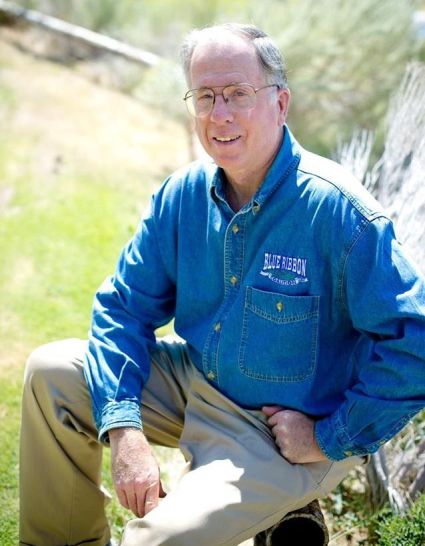
ImageClark_Collins.jpeg · 425 × 546
The Origin
A Governor Said Off-Roaders Didn't Count
Clark Collins was born in Idaho, started riding motorcycles in the Navy, and raced hare scrambles on public land. In the early 1980s, the areas where he raced began closing. When Collins took the off-roaders' case to Governor John Evans in 1984, the governor told him recreationists were politically insignificant and that wilderness designations carried more weight than trail riders did.
Collins answered by organizing. In early 1987 he formed the Idaho Public Land Users Association to rally off-roaders around a bill in the Idaho Legislature. Darryl Harris, publisher of SnoWest magazine, urged him to take the fight national. In April 1987 they incorporated BlueRibbon Coalition, and off-roaders elected its first board that fall.

The Name
Why We're Called BlueRibbon Coalition
Most people assume it's the county-fair blue ribbon. Best in show, first place. That's part of it. But in 1987, when we were founded, "blue ribbon" carried a second meaning too.
Back then, when Washington faced a serious problem, it convened a "blue-ribbon commission," a panel of the most respected people in the country, pulled together because the issue mattered too much to ignore. Reagan had just chartered one to overhaul the Pentagon. The phrase meant the heavy hitters, the ones you bring in when it counts.
Both meanings were the point. The best in show, and the serious people you bring together when something matters. Our founders, Clark Collins and Darryl Harris, started the coalition in 1987 after Idaho's governor told Clark that motorized recreationists weren't politically significant.
The name was the answer. Being told we didn't matter fueled our mission, because we belong here.
Our History
Highlights from 40 Years on the Side of Access
BlueRibbon Coalition has fought more than 70 cases in court, all the way to the U.S. Supreme Court, and has taken part in thousands of public land planning decisions. The timeline below highlights some of our 40-year history.
Scroll sideways to see more
1987
Clark Collins and Darryl Harris incorporate BlueRibbon Coalition in April 1987 to give motorized recreationists a voice in public land decisions.
1988
BRC hires Collins as its first full-time executive director.
1990
BRC works with four senators from both parties to draft the National Recreational Trails Fund Act.
1991
The act becomes law, and today's Recreational Trails Program still returns fuel taxes paid by off-highway recreation to the states for trails.
1997
BRC creates its Legal Action Fund and retains a Boise law firm to defend access in court.
1999
BRC intervenes when the Southern Utah Wilderness Alliance sues the Bureau of Land Management over off-road use in Utah.
2000
BRC and Robert Gamsby sue over a California beach closed to vehicles, the case that later shapes Operation:Accessible.
Case details
Robert Gamsby was an angler who could walk only on flat ground. He and BRC sued after 3.5 miles of beach in the King Range closed to vehicles, arguing the closure shut disabled Americans out. The court disagreed. BRC built Operation:Accessible from that lesson.
2001
The Roadless Rule restricts roads on about 58 million acres of national forest, and BRC begins a fight against it that continues today.
Case details
An Idaho federal court blocked the Roadless Rule in May 2001, months after it was issued. An appeals court reversed that order in 2002.
2003
BRC and local businesses sue over a personal watercraft ban on Lake Powell, and the lake reopens less than two months later.
Case details
A settlement between the National Park Service and the Bluewater Network had closed Lake Powell to personal watercraft. BRC and local businesses filed suit on March 17, 2003.
2004
BRC wins an injunction and then a final ruling on snowmobile access to Yellowstone National Park, a unanimous U.S. Supreme Court decision in the Utah case, and a second Supreme Court order in a Montana case.
Case details
In Yellowstone, BRC and its partners challenged the rule that would have banned snowmobiles in favor of snowcoaches only. A Wyoming federal court blocked the rule in February 2004 and struck it down that October. In Utah, the Southern Utah Wilderness Alliance had sued to force the Bureau of Land Management to restrict off-road use. BRC intervened in 1999 and stayed for five years. On June 14, 2004, the Supreme Court ruled unanimously against the lawsuit. One week later, the Court vacated a ruling against BRC in a Montana case.
2005
The Secretary of Agriculture appoints BRC's Adena Cook to the national advisory committee on national forest roadless areas.
2008
Executive Director Greg Mumm testifies on June 5, 2008, at the invitation of the chairman of the Senate Committee on Energy and Natural Resources.
2009
After a ten-year effort led by BRC and the Idaho State Snowmobile Association, a new forest plan keeps Mount Jefferson on the Idaho-Montana line open to snowmobiles.
2010
Clark Collins is inducted into the AMA Motorcycle Hall of Fame for his work defending off-roaders' access to public land.
2014
The Ninth Circuit upholds the travel plan that sets motorized routes in Montana's Pryor Mountains, after BRC and Montana riding groups step in to defend it.
Case details
The Pryors Coalition and other wilderness groups sued to overturn the Beartooth Ranger District travel plan on the Custer National Forest. BRC joined Treasure State ATV Association, Montana Trail Vehicle Association, Citizens for Balanced Use and other riding groups to defend it. On January 7, 2014, the Ninth Circuit affirmed the ruling that the plan met the National Environmental Policy Act and the minimization criteria.
2019
Clark Collins, BRC's founder and its executive director for most of its first 18 years, dies.
2022
BRC joins Utah plaintiffs in suing over the 2021 proclamations that expanded Bears Ears and Grand Staircase-Escalante National Monuments.
Case details
BRC joined rancher Zebediah Dalton and two other individual plaintiffs in arguing that President Biden's October 8, 2021, proclamations exceeded the Antiquities Act. The district court dismissed BRC's claims for lack of standing. On June 23, 2026, the Tenth Circuit affirmed that part of the ruling and sent the State of Utah's companion challenge back to the district court.
2023
BRC sues after a travel plan closes 317 miles of routes in the Labyrinth Rims and Gemini Bridges area near Moab, Utah.
Case details
Lawsuits brought by the Southern Utah Wilderness Alliance and nine other groups ended in a 2017 court-approved settlement that required the Bureau of Land Management to prepare new Utah travel plans. The Labyrinth Rims and Gemini Bridges plan was the first result, and its closures took effect October 28, 2023. BRC lost the request for an injunction in federal court in March 2024 and kept going. On September 24, 2025, BLM announced it would reassess the closed routes, including Dead Cow Loop, Hey Joe Canyon, Hell Roaring Canyon and Mineral Canyon.
2025
BRC sues over route closures in Utah's San Rafael Swell and Henry Mountains and helps open more than 420 miles of trails to e-bikes in Oregon, Nevada, Utah and Georgia.
2026
A trail builder's estate gift founds Brass Legal Center at BlueRibbon Coalition, and Executive Director Ben Burr testifies before a House subcommittee on July 1.
2027
BRC marks 40 years of defending access to public lands.
See the full case history at Brass Legal Center
Case HistoryLeadership
The People Who Have Led BRC
BlueRibbon Coalition is led by an executive director who runs the staff and a volunteer board of directors elected by members. These are the executive directors who have led BRC since 1987.
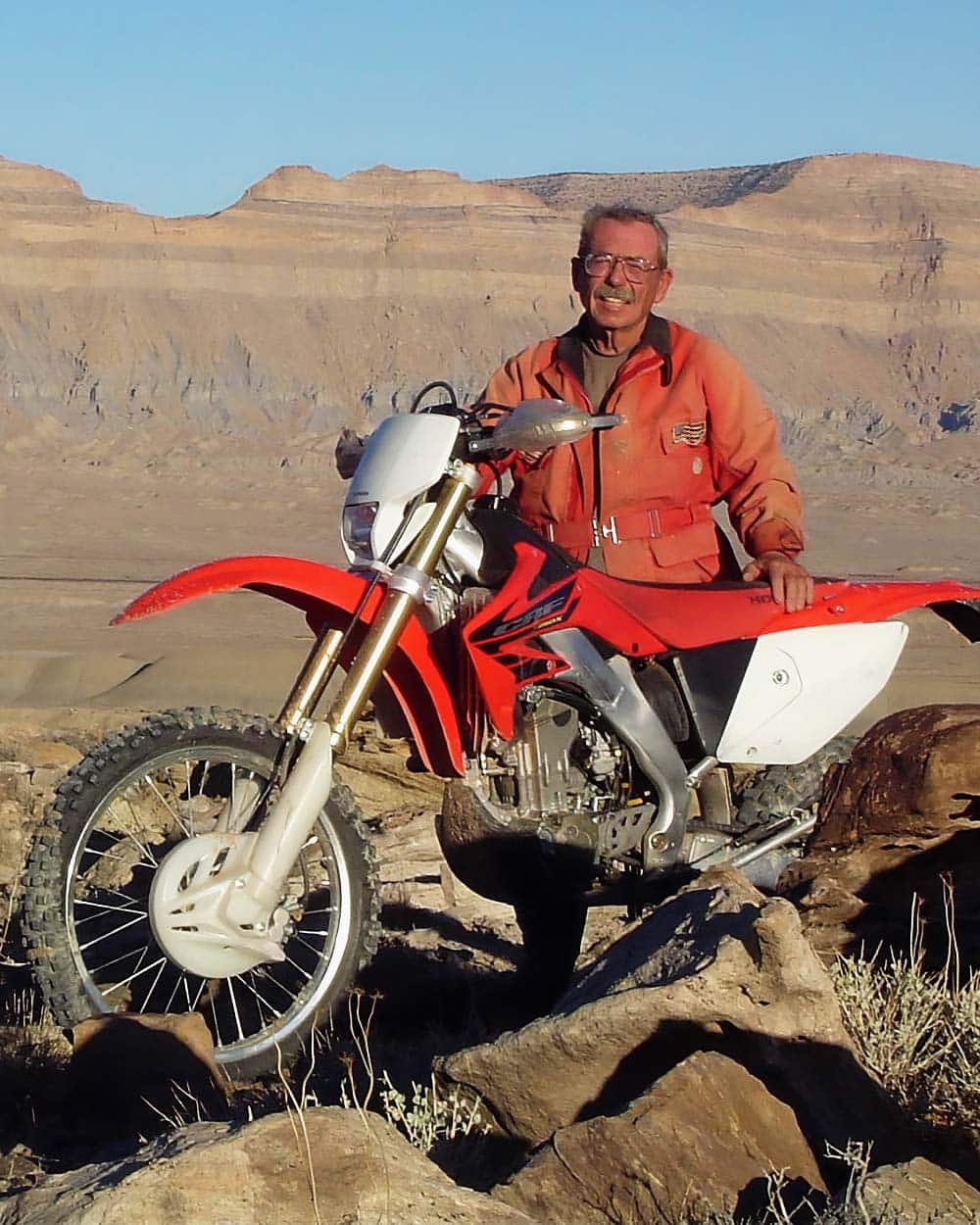
Imageblc_lp_18_dick_brass.jpg · 1000 × 1250
Our Funding
Funded by the People Who Ride
BlueRibbon Coalition is funded by its members and individual donors: motorized users, their families and the clubs they ride with.
Dick Brass was one of them. An MIT-trained engineer who worked on the Apollo program, he spent 45 years building motorcycle trails by hand in Utah's San Rafael Swell, including the trail riders call Brass' 5 Miles of Hell. In the last months of his life he named BRC the beneficiary of his estate so the fight for those trails would outlast him. His gift founded Brass Legal Center at BlueRibbon Coalition, BRC's litigation arm.
BRC's tax filings back this up. Each year's Form 990 includes a public support test, which the IRS uses to separate publicly supported charities from private foundations. The test looks at five years of support and counts only money from the public. Money from insiders and the largest donors does not count. The IRS calls them disqualified persons, a group that includes a charity's officers and directors and any substantial contributor, meaning a donor who has given more than $5,000 when that sum is more than 2 percent of all the gifts the charity has received. A charity like BRC must get more than one-third of its support from the public to qualify as publicly supported. On its last 990, which measures 2020 through 2024, BRC's public support percentage was 99.53 percent. The remaining 0.47 percent came from interest and business income, not from donors.
BRC is a 501(c)(3) nonprofit, EIN 82-0413981, and its IRS filings are public.
We Belong Here
What BRC Does Today
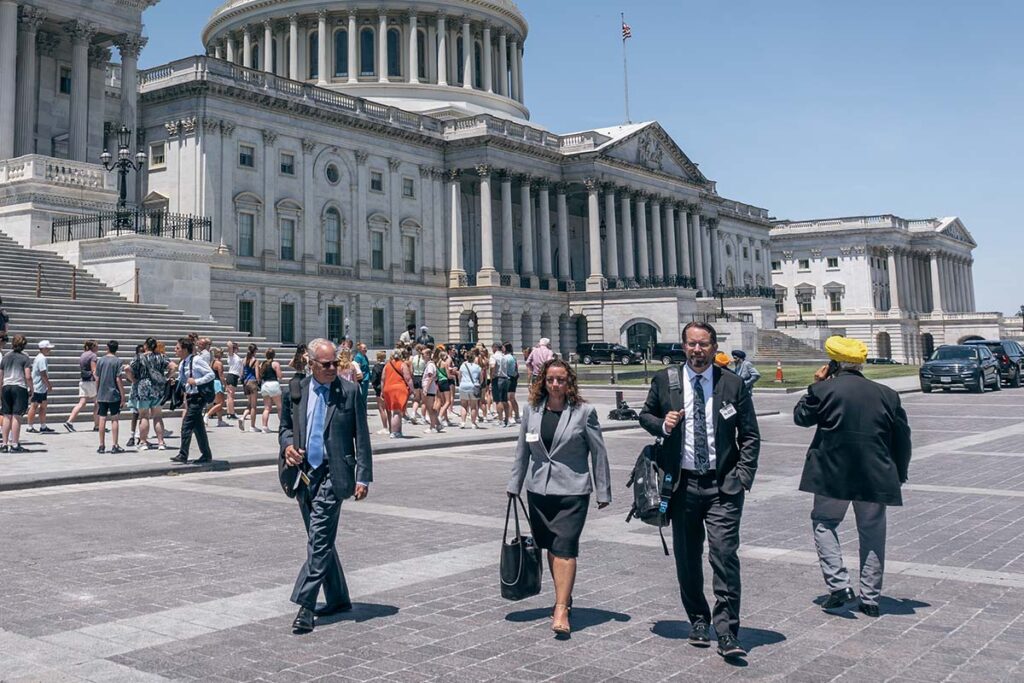
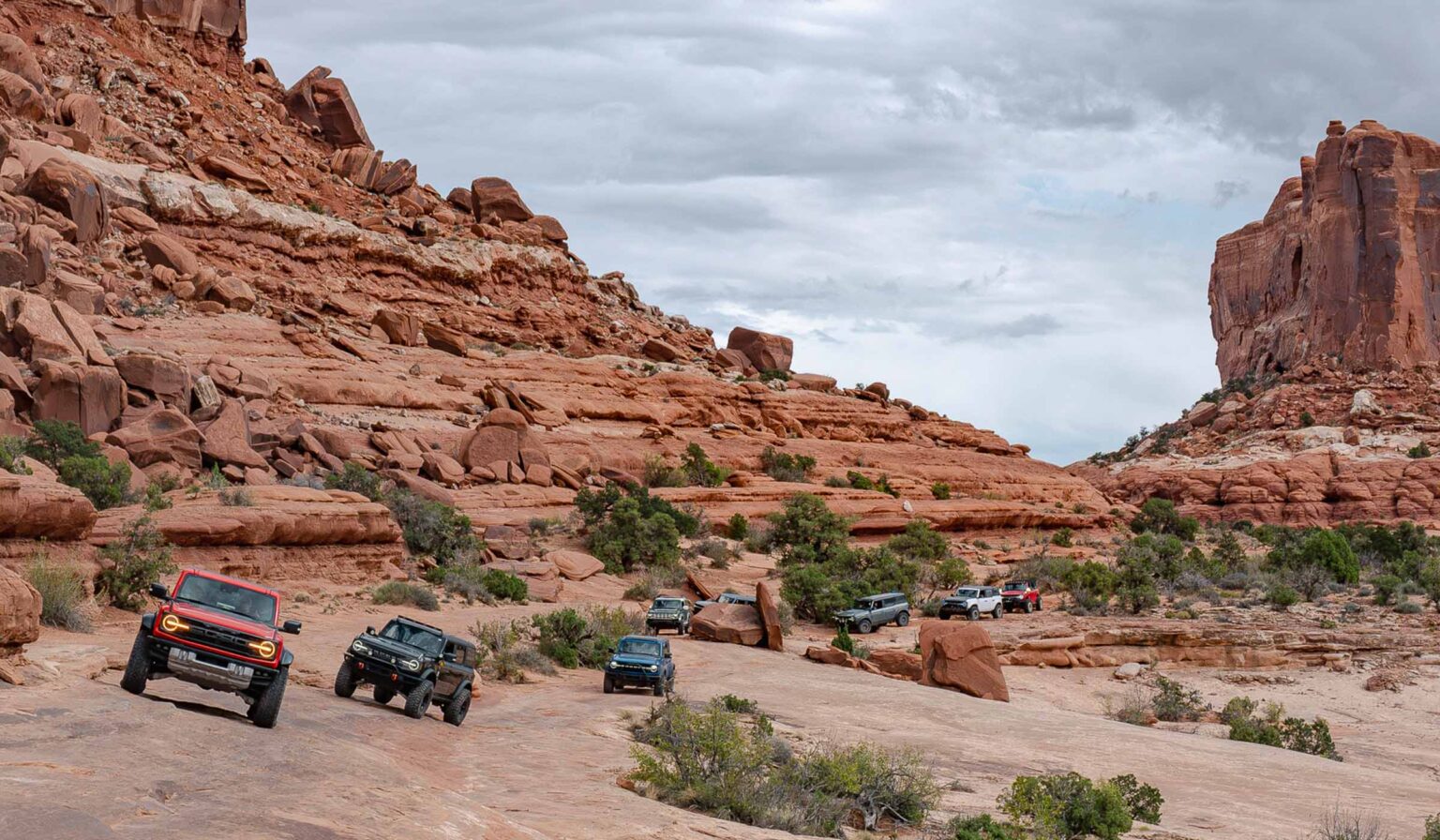
BRC keeps public lands and waters open for motorized recreation through litigation, advocacy and awareness. Its members live in all 50 states and ride 4x4s, ATVs, UTVs, dirt bikes, snowmobiles, e-bikes and watercraft.
Imagebrc_in_dc.jpg · 1200 × 800
Litigation
In court, Brass Legal Center at BlueRibbon Coalition challenges unlawful closures and defends off-roaders when anti-access organizations sue. Its current docket includes route closures in Utah's San Rafael Swell and Henry Mountains, the Chuckwalla National Monument in California, the Oregon Dunes National Recreation Area, and the gated canyons on Clarkston Mountain in Utah.
Advocacy
In Congress and in agency rulemaking, BRC represents motorized recreation on issues from the 25-year fight over the Roadless Rule to the Outdoor Americans with Disabilities Act, which BRC helped draft.
Awareness
For the public, BRC turns agency paperwork into plain language and analyzes the latest research and "science" for our members. In 2025, BRC reviewed more than 43,000 pages of agency plans and documents and sent 86 action alerts. Its NEPA Jail tracker documents the litigation that holds forest projects in legal limbo. Its Comment Tracker makes it easy for the public to comment on bills and proposals that affect access throughout the country.
Defend Your Ground
Defending Access to Public Lands Since 1987
In 1984, a governor told Clark Collins that off-roaders did not count. Since then, riders have helped win a federal trail program and a unanimous Supreme Court decision, and one of them funded a legal center with his life savings. Every membership adds to that record.
Answers
Frequently Asked Questions
Who founded BlueRibbon Coalition?
Clark Collins, an Idaho dirt bike racer and electrician, and Darryl Harris, publisher of SnoWest magazine, founded BlueRibbon Coalition in April 1987 after Idaho's governor told him recreationists were politically insignificant. Collins was inducted into the AMA Motorcycle Hall of Fame in 2010 and died in 2019.
Why is it called BlueRibbon Coalition?
The name carries two meanings: the blue ribbon awarded for first place, and the blue-ribbon commission, the panel of respected people Washington convenes when a problem is too serious to ignore. BRC's founders chose it in 1987 as their answer to a governor who told them off-roaders did not matter.
When was BlueRibbon Coalition founded?
BlueRibbon Coalition was incorporated in Idaho in April 1987.
Who leads BlueRibbon Coalition today?
Ben Burr has been executive director since 2021. Ranch Pratt is president of the volunteer board of directors, which BRC members elect.
Who funds BlueRibbon Coalition?
BRC is funded by its members and individual donors, the people who ride on public lands and want them kept open.
Is BlueRibbon Coalition funded by oil, timber or mining companies?
No. BRC is funded by its members and individual donors. Its IRS filings are public at blueribboncoalition.org/990-irs-filings.
What does BlueRibbon Coalition do?
BRC keeps public lands and waters open for motorized recreation through litigation, advocacy and awareness. Its litigation arm is Brass Legal Center at BlueRibbon Coalition.
Is BlueRibbon Coalition a trail etiquette or stewardship group?
No. BRC's work is litigation, advocacy and awareness. BRC appreciates the hard work performed by clubs and other organizations that run trail etiquette and stewardship programs.
Has BlueRibbon Coalition been to the Supreme Court?
Yes. BRC intervened in Norton v. Southern Utah Wilderness Alliance, which the U.S. Supreme Court decided unanimously in 2004, and the Court vacated a Ninth Circuit ruling against BRC in Blue Ribbon Coalition v. Montana Wilderness Association that same month. The full record is on BRC's case history page.
Is BlueRibbon Coalition a nonprofit?
Yes. BRC is a 501(c)(3) nonprofit, EIN 82-0413981. Donations to BRC are tax-deductible to the extent allowed by law.
Last updated: November 2026
LEGAL ISSUES
Lawsuits & legal challenges
POLICY ISSUES
Regulations behind closures
OPERATION: ACCESSIBLE
Access for all
LATEST FIGHT
BRC Joins Fight for the Oregon Dunes
Learn about the case and how you keep riders on the Dunes.