The U.S. Senate Committee on Energy and Natural Resources will mark up 39 bills at its business meeting on Wednesday, July 29. Below is a rundown of the agenda items BRC members would care about. This is a big, mixed bag: land-designation bills, park and trail housekeeping, water infrastructure, and a couple of access measures.
Where BRC comes in: Of the 39 bills, one is a bill BRC helped draft and is actively running an action alert on — S. 2968, the Outdoor Americans with Disabilities Act (item 21). Several others create new Wilderness, mineral withdrawals, or conservation designations that would foreclose motorized and mechanized access.
Of the bills up for markup, 6 of them will designate new Wilderness, locking up about 2 million acres of land to any mechanized or motorized travel.
Access
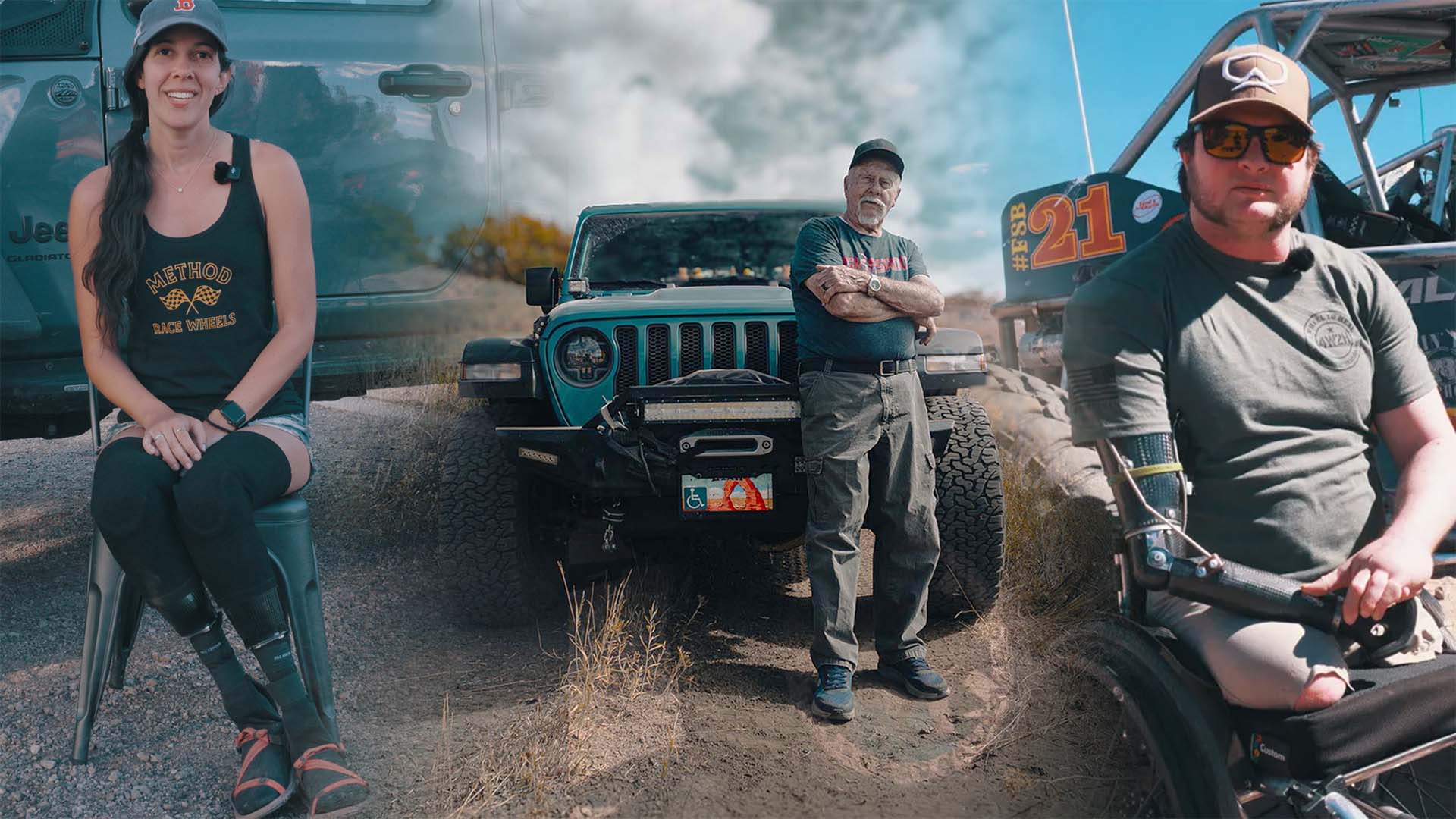
S. 2968 — Outdoor Americans with Disabilities Act (Lee/Curtis): Would define "disability-accessible land" as any square mile with 2.5+ miles of road open to motorized/off-road vehicles, and require agencies to factor that into travel management plans, making it harder to close existing routes outside wilderness/roadless areas. BRC publicly supports this bill, the one bill here BRC helped write. Write to your members of Congress to support this legislation. Jump to form to support Outdoor ADA »
Wilderness Bills
S. 764 — CORE Act (Colorado): Combines four proposals covering ~420,000 acres in Colorado, of which ~71,000-73,000 acres become new wilderness (San Juans, Continental Divide), plus mineral withdrawals and a Curecanti boundary fix. Motorized: Standard wilderness ban within the new units, but backers say no existing off-highway vehicle (OHV), motorcycle, or snowmobile routes outside the boundary would close, and mountain biking stays allowed in the new ~80,000-acre recreation area. One groomed route (Forest Service Road 703) would become a dead-end cherry-stem, cutting into a winter over-snow vehicle (OSV) area without a formal closure.
S. 888 — Oregon Recreation Enhancement Act: Adds ~59,500 acres to the Wild Rogue Wilderness along the Rogue River, plus two new non-wilderness recreation areas (Rogue Canyon, Molalla) and a mineral withdrawal. Motorized: Standard wilderness ban on the new acreage; unclear from available sources whether existing OHV trails (e.g., Briggs Creek Trail) fall inside or outside the new line.
S. 1341 — Sarvis Creek Wilderness Completion Act: Adds ~6,817 acres to the existing 44,556-acre Sarvis Creek Wilderness in Routt National Forest, CO. Motorized: Standard ban applies, but the specific parcels are already managed as non-motorized under the current travel plan, so the practical effect on existing use is minimal.
S. 1737 — Wild Olympics Wilderness and Wild and Scenic Rivers Act: Designates ~126,500 acres of new/expanded wilderness in Olympic National Forest, WA, plus Wild and Scenic river segments.
These four bills would designate a total of 265,000 acres of new Wilderness.
Selling Public Lands/Wilderness Designations
S. 1005 — Southern Nevada Economic Development and Conservation Act: Designates over 1.6 million acres of new wilderness, transfers Bureau of Land Management (BLM) tracts to Clark County/tribes for housing, and creates ~122,000 acres of new OHV Recreation Areas. Wilderness designations would ban motorized use. Opens up to 25,000 acres for development/sale by Clark County over 50 years.
S. 1195 — Pershing County Economic Development and Conservation Act: Designates 130,000+ acres of new wilderness across seven areas in NV, releases 48,000+ acres from Wilderness Study Area (WSA) status, and authorizes land sales/exchanges to claim holders and private parties. New wilderness bans motorized use; releasing land from WSA status removes interim restrictions and could open those acres to motorized travel depending on later BLM decisions. However, the Wilderness designations far outweigh the release of WSA parcels. Parcels sold into private hands exit the federal multiple-use framework entirely. Establishes a "Checkerboard Resolution Area" authorizing sale or exchange of 356,100 acres to resolve the alternating public/private land pattern.
Combined, that's roughly 381,000 acres of public land authorized for sale/exchange across the two bills.
Wild and scenic rivers
S. 945 — Smith River NRA Expansion Act: Adds ~58,000 acres (North Fork Smith River watershed, OR) to the Smith River National Recreation Area (NRA) and designates ~74 miles as "wild" rivers. This bill would codify existing no-motorized status, meaning motorized access would never be permitted in this area again.
S. 1476 — Greater Gila Wild and Scenic River Act: Designates ~446-450 miles of Gila/San Francisco River segments in NM, and transfers ~440 acres to Gila Cliff Dwellings National Monument, managed by the National Park Service (NPS). Stricter "wild" segments carry no-road/no-motorized standards; the NPS land transfer shifts management to an agency with tighter motorized rules than the Forest Service.
Expansions/designations
S. 1870 — Rim of the Valley Corridor Preservation Act: Adds 191,000+ acres to Santa Monica Mountains NRA (CA), including current Angeles National Forest land with OHV trails. NPS rules (36 CFR Part 4) are stricter than Forest Service multiple-use management; there's no explicit carve-out in this bill to protect existing OHV routes.
S. 1777 — Joshua Tree National Park Expansion Act: Adds ~20,149 acres of BLM/private land to Joshua Tree National Park. BLM routes in the area would come under stricter NPS motor-vehicle rules, and there are no protections for current OHV routes in the bill.
Roughly 211,000 acres combined would shift from Forest Service/BLM multiple-use management (which allows designated OHV routes) to stricter NPS motor-vehicle rules, with no carve-out in either bill protecting existing routes.
Water
S. 3732 — Water Security and Drought Resilience Act: Reauthorizes Reclamation's Small Storage Program, funding surface/groundwater storage projects (200–30,000 acre-feet) and groundwater recharge projects (up to 150,000 acre-feet/year) across the 17 western Reclamation states.
S. 3738 — MORE WATER Act: Reauthorizes large-scale water recycling/reuse funding (raises the per-project federal cap to $50 million, covering up to 25% of costs) and creates a new Water Conveyance Improvement Program to repair aging canals and aqueducts. Water recycling and fixing leaky conveyance infrastructure recover water that's otherwise wasted, effectively adding supply without new diversions.
Fire/Grand Canyon
S. 3785/H.R. 5729 — North Rim Restoration Act: Authorizes expedited emergency contracting (up to 7 years) to rebuild Grand Canyon National Park/Kaibab National Forest areas damaged by 2025 wildfires.
IBLA
H.R. 677 — Expedited Appeals Review Act: Sets deadlines for Interior Board of Land Appeals (IBLA) decisions; missed deadlines make the original agency decision final and subject to de novo judicial review. BRC is currently stuck in the IBLA process on decisions that have been made on travel management plans. This bill would help streamline these processes to make planning and National Environmental Policy Act (NEPA) review more efficient.
Outdoor ADA Support form
Write to your members of Congress to support the Outdoor ADA legislation.
Oppose Creation of new Wilderness
Fill out the form below to tell your representatives not to support the creation of new Wilderness, the most restrictive land management designation.