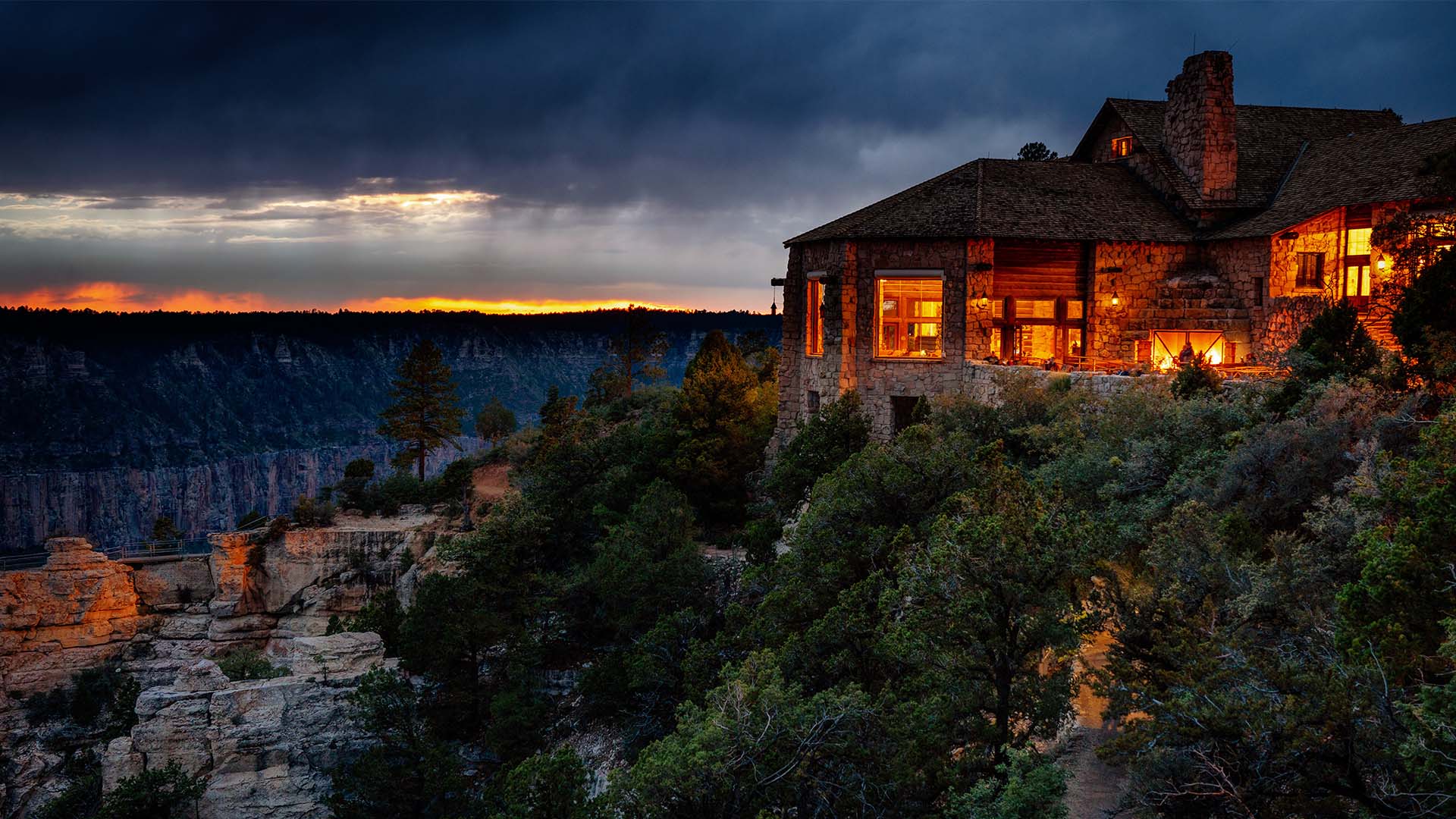
The North Rim recovery proposal at Grand Canyon National Park is a familiar story: more and more restrictions harming heritage, economies, the environment and the actual health and safety of the American people. Decades ago, the North Rim had very few facilities even though it was a national park. Because it was a national park, it came with restrictions on what you can do and how you can access the park. Concessioners came in and built businesses that made the canyon accessible in such a rural area of the world, so the public could actually enjoy, see and experience it. The North Rim is so remote that, without those services, the average person would have a hard time ever getting there. Today a strong movement wants to see fewer and fewer people on our public lands, actually enjoying these national treasures. These groups also oppose fire suppression treatments that prevent catastrophic wildfires.
The Dragon Bravo Fire Destroyed Grand Canyon Lodge
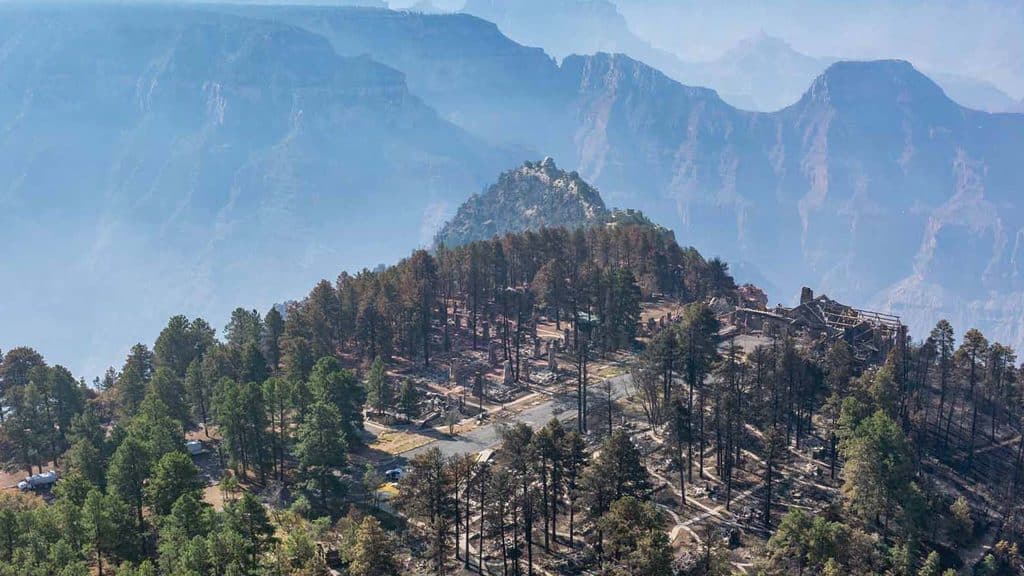
The North Rim did not burn down by chance. Lightning started the Dragon Bravo Fire on July 4, 2025. Instead of putting it out, the National Park Service managed it under a “confine and contain” strategy, letting it burn for fuel reduction and resource benefits. Much of the fuel treatment on the North Rim was out of date. Most of the prescribed burning and thinning inside the park was 17 or more years old when the fire started. This is a clear example of how anti-access groups prevent treatment from moving forward and put pressure on the agency to prioritize a hands-off approach.
By July 10 the fire had met or exceeded the critical thresholds in the park’s own fire management plan. On the night of July 12, the fire swept through the North Rim developed area. It destroyed the historic Grand Canyon Lodge and more than 100 other structures, including cabins, the visitor center, park headquarters and a whole lot of memories and blood, sweat and tears. The fire grew to more than 145,000 acres and took about three months to contain. Suppression costs reached $135 million.
The losses reached the families and businesses that depend on the North Rim. Canyon Trail Rides refunded about $100,000 in reservations, and 12 to 14 of its North Rim workers lost their jobs. In April 2026, Interior Secretary Doug Burgum told a Senate committee that “in retrospect, an approach of suppression versus containment might have saved hundreds of millions of dollars.”
Bright Angel Creek Flash Flood After the Dragon Bravo Fire
The damage did not stop when the fire went out. On August 29, 2026, monsoon rain dropped more than an inch in 30 minutes near Phantom Ranch, and a flash flood tore down Bright Angel Creek. Dozens of people were airlifted out of the canyon, and three men on a hiking and fishing trip were killed. Officials named the Dragon Bravo burn scar, which sits above the canyons that drain into Bright Angel Creek, as one of several factors behind the flood. Scientists had warned in 2025 that the fire would increase runoff and the risk of flash floods across the burned area. A National Weather Service meteorologist has since said most of the runoff came from unburned ground, and the full role of the burn scar is still being studied. As of late October 2026, Phantom Ranch and the North Kaibab Trail remain closed.
Canyon Trail Rides and North Rim Mule Rides
Canyon Trail Rides is a good example. The family business has operated on the North Rim for over 40 years and helped make the lodge and this area what they are. In 2009 its day ride permits were taken away, and it has been limited in how many rides it can offer ever since. Now this proposal explores reducing or completely eliminating mule rides from the North Rim entirely. Many people can’t hike, and without the mules they won’t be able to experience the canyon. The mules are also called on many times a year for emergency situations. Even a reduction in rides would likely make the business economically unfeasible, since its operating season is already so short. Concessioners like Canyon Trail Rides need lodging and other facilities to operate, because people come when there is a place to stay and eat.
What the North Rim Recovery Plan Proposes
The North Rim reopened May 15, 2026, without overnight lodging, and stock use was suspended for the entire 2026 season. The National Park Service is taking public comment on preliminary concepts for the North Rim’s long-term recovery through November 6, 2026, at 11:59 p.m. Mountain Time. NPS says it wants to use the rebuild to “reimagine” the North Rim rather than restore what existed before.
NPS presents three concepts:
- Concept A, Restore and Modernize: the North Rim is rebuilt generally as it was, with a May 15 to November 30 season.
- Concept B, Transform: the North Rim becomes a four-season destination with a season from about April 1 to January 5, and the lodge moves to a new location.
- Concept C, Expand: access is year-round, with more lodging and campsites. The concept also adds a park-and-ride hub at CC Hill, less parking on the Bright Angel Peninsula, and a shuttle system.
Fire Point Road, Mule Rides and Winter Use in All Three Concepts
Several actions appear in all three concepts, so choosing a concept does not avoid them:
- NPS would explore options to “retain, reduce, or eliminate commercial stock use that originates from the North Rim.”
- Fire Point Road would become a hiking trail inside the park, with a vehicle barrier at the boundary between the park and the Forest Service.
- The Cape Royal and Point Imperial Roads would have hiking- and biking-only periods, closing them to vehicles for a limited time.
- The North Kaibab Trailhead would move to CC Hill, with a new hike/bike trail connecting to the Bridle Path, which the mule rides share.
- NPS would set new guidance on backcountry vehicle use and at-large vehicle-based camping. It has not released any details.
The two four-season concepts limit winter recreation to non-motorized use. Concepts B and C open the scenic roads for “nonmotorized winter recreation” and designate routes for skiing and snowshoeing. No concept considers snowmobiles or any other motorized winter use.
Comment by November 6 to Keep Fire Point Road Open
NPS needs to comply with laws like the EXPLORE Act, which Congress passed to expand recreation on public lands, not reduce it. NPS should cut through the red tape and let these businesses operate again. It should consider other types of use besides non-motorized ones, including snowmobiling. And it should not remove Fire Point Road, the main vehicle access to Fire Point, because many people cannot hike.
Groups block projects, a natural disaster hits, and businesses and economies are lost.
Sign the petition below to save the North Rim!