The groups fighting BAAJA hardest want you to believe it guts environmental protection and hands public land to industry, but the bill text shows something else: it makes changes to the laws anti-access groups have used for decades to close the places you ride. And that’s why they oppose it. Under BAAJA, some of their most effective tools to close lands for uses they don’t agree with, like motorized recreation, become weaker. The bill also has parts that will increase development pressure that could create risk for new closures. The question is whether these trade-offs are worth it.
We believe when it comes to the environmental laws that have been rigged through endless lawsuits to close public lands, we do need a course correction. Over several decades, the process for approving projects on public land has accumulated steps that reward challenge, delay, and closure more than they reward good decisions. That affects oil pipelines and solar fields. The process affects travel plans and special use permits. It also affects projects most of our members would welcome, such as the Babylon Post-Fire Recovery Project, which is a plan to do reclamation work like replanting trees on a burn scar in the Manti-La Sal National Forest in Utah. BRC supported this plan which drew opposition from the Southern Utah Wilderness Alliance.
Our regulatory system has created an environment where it is impossible to do anything, and the process that might block an oil pipeline is also obstructing the Forest Service from planting trees. If environmental protection laws can’t even allow planting trees in burn scars, then it’s probably time to rethink how much environmental protection these laws are creating. The Supreme Court has made decisive moves to reform this system, and we see BAAJA as part of a broader course correction.
The Senate passed the Bipartisan American Affordability and Jobs Act on November 19 by a vote of 62-33, with support from both parties. The House is expected to take up the bill after Thanksgiving. If the House passes it, President Trump has indicated he will sign it. Its 494 pages change how federal agencies approve projects on public land, how long people have to challenge those approvals in court, and what a judge can order when a challenger wins. For anyone who rides, drives, hunts, or camps on that land, those changes will help decide whether the places you use stay open. For an organization like BlueRibbon Coalition that runs a legal center, these changes will affect our work.
BlueRibbon Coalition supports parts of BAAJA, and the six points below explain which parts, along with the major risk we already know how to fight.
1. Delay Stops Paying Off: A flaw in the paperwork can no longer freeze a project for years. When a judge finds a problem with an environmental study, the agency gets 180 days to fix it while the work continues. BRC’s NEPA Jail tracker documents 279 Forest Service and Bureau of Land Management projects held up by litigation and challenges, many of them meant to thin overgrown forests and cut wildfire risk where you ride, and those projects averaged 4.2 years just to clear NEPA. The Frog Project on California’s Sequoia National Forest, which covered 1,630 acres of hazardous fuels, sat in NEPA Jail for 20 years after challenges from Sequoia ForestKeeper, Sierra Club, and Earth Island Institute. And when they win, even if it’s just a settlement, the American tax payers pay the legal bill to the tune of billions of dollars.
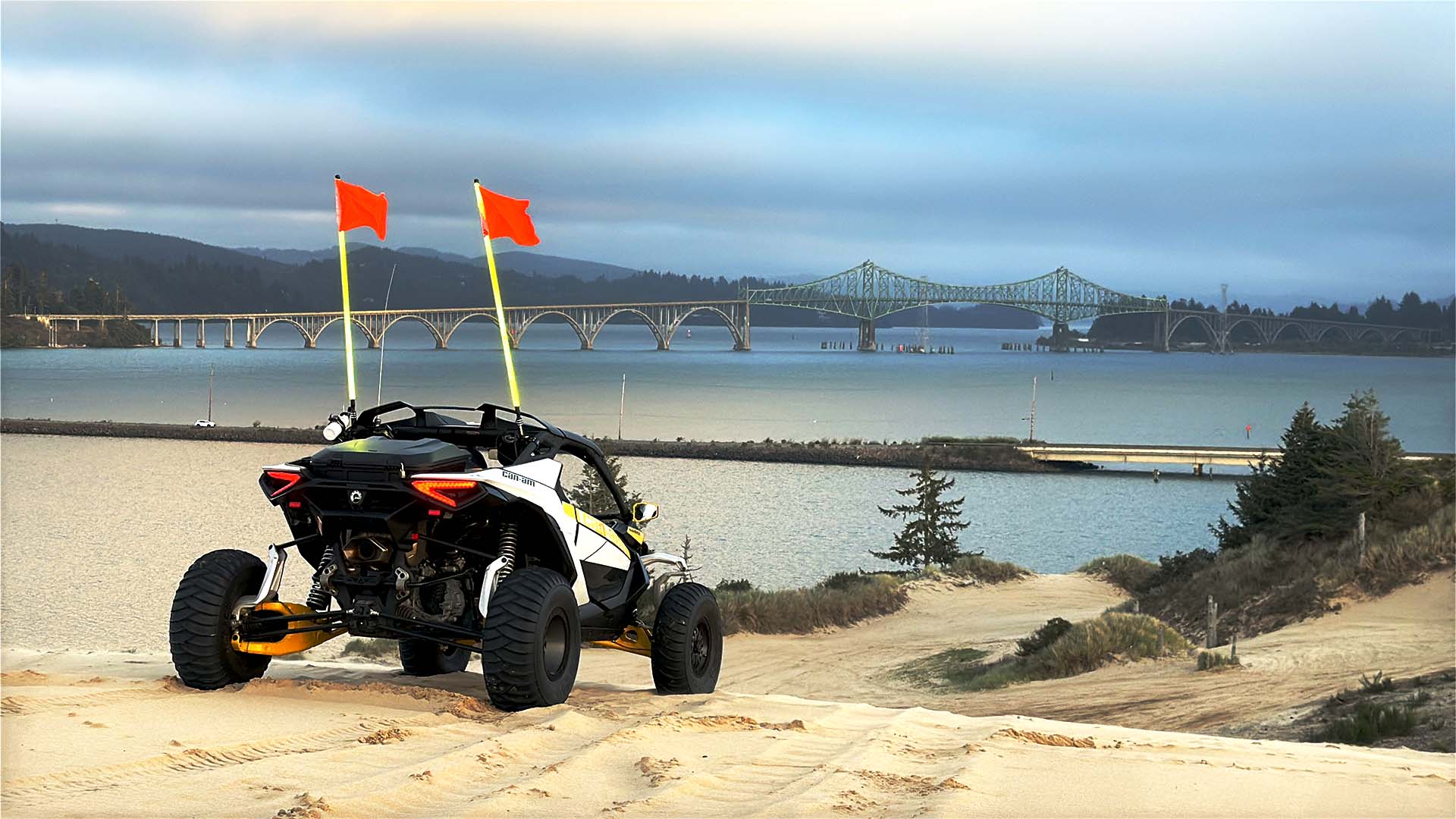
2. Science That Can Take a Punch: A closure built on wildlife data now needs data that holds up. BAAJA requires the science to account for its own error rates, meet professional standards, and weigh what state wildlife agencies collect. This is the standard we want applied at the Oregon Dunes and Western Mojave, where the Center for Biological Diversity is using bad science and poorly written rules in the Endangered Species Act to wage lawsuits that close millions of acres of OHV use in areas families have used for decades.
3. No Comment, No Lawsuit: You have to show up before you can sue. A NEPA lawsuit now requires a detailed comment filed during the public process and proof of direct harm, which moves the fight over public land back into the open, where the outcome depends on who shows up with comments, evidence, and members who use the ground, instead of on which group can keep a project tied up in court the longest. That rewards the work BRC already does on hundreds of federal actions every year.
4. Straight to the Appeals Court: Lawsuits get shorter. NEPA cases go straight to the federal appeals court and skip a trial stage that adds years without adding facts, and the House Natural Resources Committee puts the average environmental impact statement lawsuit at 4.2 years. Again, our NEPA Jail tracker transparently documents the abuse.
5. Less Red Tape on Fire Prevention: Controlled burns get easier to carry out. States can count smoke from a planned burn as an exceptional event under the Clean Air Act, and challenges to community fuels projects move on a 150-day clock, which matters when wildfire smoke already costs Western recreation users roughly $2.3 billion a year across 21.5 million affected visits.
6. The Risk Didn’t Start With BAAJA: BAAJA will increase the number of projects on public land. This is a risk we’ve already been fighting when these projects threaten access. We acknowledge BAAJA could speed up solar, transmission, and energy projects. That threat was already here in 2024, when the federal Western Solar Plan opened 31.7 million acres of Bureau of Land Management land across 11 Western states to utility-scale solar. The Wilderness Society cheered that plan on, and its president now publicly opposes BAAJA. BRC opposed the plan and would oppose future plans like it. The Brass Legal Center at BlueRibbon Coalition is ready to fight any project, under any law, that excessively restricts public land recreation access for our members.
Here is a deep dive on each of these points:
National Environmental Policy Act and Endangered Species Act Receive Significant Updates
Two federal laws drive most public-land fights, and most Americans have never had a reason to learn how they work.
The first is the National Environmental Policy Act, or NEPA, passed in 1970. NEPA tells the government to study the environmental effects of a decision before it acts, whether the decision is a trail plan, a grazing permit, a logging project, or a solar farm. NEPA does not tell the agency what to decide. It tells the agency to look before it leaps, write down what it found, and collect public comment.
The second is the Endangered Species Act, or ESA, passed in 1973. The ESA protects animals and plants the government lists as threatened or endangered, and it can halt activity that would harm them or the habitat they live in. When a species gets listed, the land around it changes: new rules, new closures, and new reviews before anything can move.
Both laws were written as guardrails. Over fifty years, groups have used these laws to create a litigation playbook that has become overused. Sue over a study and a project can freeze for years. Petition to list a species and a riding area can close. In those cases the goal shifts from a better decision to delay or closure.
An end to endless delays
Today, a lawsuit over an environmental study can freeze a project for years while the agency rewrites paperwork a judge flagged. The group that sued does not have to prove the project is wrong. It only has to win the delay.
BAAJA changes what a judge can do. When a court finds a flaw in a NEPA study, it sends the decision back to the agency with 180 days or less to fix it, and the approved work can continue in the meantime. On that paperwork flaw alone, the judge can no longer cancel the approval or shut the project down. A challenger who shows that a project would break another law can still stop it, and a claim that the decision itself was arbitrary keeps the remedies it has today. At BlueRibbon Coalition we have often included NEPA claims in our lawsuits, but these claims are regularly stacked with other legal claims.
Earthjustice, which employs more than 240 full-time attorneys, says the bill “effectively nullifies” NEPA. Its objection is that courts could no longer cancel a study or halt a project over it. We read NEPA differently, and so did the Supreme Court. In 2025, in Seven County Infrastructure Coalition v. Eagle County, the Court unanimously ruled 8-0 that NEPA is “purely procedural” and “does not mandate particular results, but simply prescribes the necessary process for an agency’s environmental review of a project.” BAAJA reiterates that principle into the statute. Reasonable people can disagree about what NEPA should accomplish. We believe a process law should produce better decisions on a predictable timeline.
The opponents of this bill say it is only about data centers and transmission lines. It is about much more. BRC’s NEPA Jail tracker counts about 279 Forest Service and Bureau of Land Management projects stalled in litigation as of August 2026, many of them meant to cut wildfire risk or restore our forests. It shows what a process with no endpoint costs the land and the rural communities. BRC supports the parts of BAAJA that remove the reward for filing a challenge built for delay instead of a better outcome.
Endangered species protections should rest on strong science
Of everything in BAAJA, the change to how wildlife science is judged matters most for our members. The Endangered Species Act is only as sound as the science behind it, and for decades that science standard has been low. Bad science used to justify protection of species has led to some of the biggest OHV closures we have seen.
The ESA says agencies must use the “best scientific and commercial data available.” In practice that has meant whatever data is on the table, including work built to reach a predetermined conclusion. The standard asks for the best data available, not for data that is actually sound. An advocacy group can fund a model, hand it to an agency, and watch it become the “best available science” because nothing better was offered. That does not protect wildlife, and it has contributed to lost access while doing little to recover the animals it is meant to protect.
BAAJA tightens the definition. It requires that the best scientific and commercial data account for its own error rates, meet professional standards, and carry no presumptions that bias the result. It also requires the Fish and Wildlife Service to weigh the data states collect, not only the data an advocacy group supplies. These are modest steps, and we want more.
The northern spotted owl shows why. The government listed it in 1990 and the agenda-driven science through the years focused almost entirely on how to justify killing the logging industry to save the owl. Thirty-six years later, the owl is functionally extinct across large parts of its range. In hindsight, catastrophic wildfire and the opportunistic barred owls didn’t follow the limited science cited to save the owl. We didn’t have time to waste, and the “best available science” standard focused attention in the wrong direction for decades leading to a complete failure to recover the spotted owl. Everyone should want endangered species to recover. More rigorous scientific standards are better for species, better for the environment, better for science, and certainly better for access.
Some of the biggest closures of riding areas and trails we’ve recently seen were the result of ESA protections based on weak science. In the Western Mojave, listings tied to the desert tortoise helped drive route closures across a network riders had used for generations. At the Oregon Dunes, the Center for Biological Diversity has relied on the coastal marten’s threatened listing in a case seeking closures in an area off-road families have ridden for decades. BRC’s position is plain: if a species needs protection, prove it with science that holds up. BAAJA starts down that road, and we intend to push for more reforms.
Showing up counts
Under BAAJA, you can take a NEPA decision to court only if you first filed a substantive comment, detailed enough to put the agency on notice, and you can show direct harm. For an organization like ours, one member’s harm carries the group into court. This is why BRC has always been a membership organization. Without dues-paying members, we have no one to represent in court, and that does not change under BAAJA. If you want to be part of the large community of members represented by our work, we encourage you to join BRC today.
BRC comments on hundreds of federal actions a year. A rule that rewards the work of naming routes, documenting decades of use, and bringing data is a rule that rewards the way we already operate. Comment periods on major studies will now run 45 to 60 days. Historically, we have seen comment periods like this run for up to 90 days. On less significant projects we’ve seen comment periods last anywhere from 15 to 60 days. We have no concerns with our ability to produce substantive feedback within the newly proposed window, and we will keep asking members for the place-specific facts that make a comment stick.
NEPA Challenges will go straight to the appeals court
NEPA cases will begin at the federal court of appeals for the circuit where the project sits, skipping the district court. The House Natural Resources Committee puts the average environmental-impact-statement lawsuit at 4.2 years. These cases are decided on the agency’s written record, so the trial-court stage adds years without adding facts. The change applies to our own NEPA claims too, and we support it anyway, because a five-year lawsuit adds cost and uncertainty for everyone. Most of our lawsuits include claims under other statutes, so these reforms will not undermine our work, though they will change how we plan it. This reform will likely let agencies spend more time on the ground and less time in court.
Wildfire: a start, not a complete fix
The bill lets states treat smoke from a planned, controlled burn as an “exceptional event” under the Clean Air Act, which lifts an air-quality penalty that has discouraged the very burns that prevent far worse fires. BAAJA also orders EPA to make that treatment easier to document, and it puts legal challenges to community fuels-reduction projects on a 150-day clock with faster review. It does not exempt controlled burns from NEPA or create a new fast track for fuels work. Other bills go further on forest health.
More projects on public land, and what that means for access
BAAJA will lead to more projects on public land. Some will add access. Some will reduce access. Some will change the landscape in ways that make recreating there less appealing. Some will improve landscape health. The bill speeds all of this work. It sets one-year deadlines for environmental assessments and two years for larger environmental impact statements. It directs agencies to adopt new exclusions for low-disturbance renewable energy work. It also sets 30-day timelines on decisions for renewable energy rights-of-way on Bureau of Land Management and Forest Service land, and protects permits that have already been issued.
We are prepared to support the good policy outcomes that will result from BAAJA, and we are prepared to continue to challenge projects that impact our recreation access. But this isn’t a new threat. Public lands have been managed for multiple use for over a century, and the biggest closures and restrictions we’ve seen come from anti-access lawsuits, policies, and designations. As long as recreation users show up, we can work with other permitted users on public land.
That is why we have always evaluated projects one at a time. BAAJA does not change that approach. It changes the playing field and the clock, and it preserves the ability of an organization to influence an outcome as long as it shows up. More projects on shorter timelines will mean more work for BRC, and we are preparing for it. Our new comment tracker makes it easier for our team and our members to see which projects are open for comment near the places you ride and to file the place-specific comments that count. If you haven’t seen our comment tracker, you should check it out.
We’ve also been thinking about ways that regulatory and permitting reform can help solve some of the biggest challenges facing recreation. Permitting is the largest barrier to new Western water supply. This is a problem our proposed Colorado River Abundance Act takes on. BAAJA’s deadlines and permit limits are in line with what we proposed to reform permitting for water projects.
Where the House can improve the bill
The text we reviewed does not use the word “recreation” or the term “multiple use,” and it does not create any new opportunities specifically for recreation. Other statutes like the Federal Land Policy and Management Act (FLPMA) and the National Forest Management Act (NFMA), create statutory protections for multiple use and recreation. The omission of recreation projects from BAAJA is a missed opportunity.
The House is expected to take up BAAJA after Thanksgiving, and the bill could be amended. Since Senate text does not give serious attention to recreation, one way to address the omission is already before the House. The Recreation Permitting Improvement Act, H.R. 9248 was introduced earlier this summer by Rep. Jeff Hurd (R-CO) with Rep. Chris Deluzio (D-PA) as a cosponsor. It would make qualifying recreation projects eligible for FAST-41, the federal program that coordinates agencies and sets review timelines. Eligible projects include trail systems, campgrounds, boat ramps, marinas, OHV facilities, visitor centers, and ski resort expansions. The bill does not waive environmental review.
BRC’s Executive Director, Ben Burr, testified in support of H.R. 9248 before the House Natural Resources Subcommittee on Federal Lands on July 1, 2026. Adding it to BAAJA would put recreation in the bill on similar terms as every other kind of project, and would be a significant improvement. We recognize that amending the bill has timing consequences, and we leave that judgment to Congress. If they don’t include it in BAAJA, it is worth fighting for in the future.
What we will do, and what you can do
Brass Legal Center at BlueRibbon Coalition exists to defend access in court. Under BAAJA, the job will become even more important. We plan to be in the record before a decision with comments the agency cannot ignore, move fast inside the new 150-day window, and pick the fights worth winning. The reforms in this bill reward the disciplined, evidence-first advocacy we built our organization to do.
The fight now moves to the House. Read the bill for yourself. Share your feedback. But also review what projects care currently out for comment now. File detailed comments on the projects near the ground you use. Watch for BRC action alerts, and when one affects your access, act on it.
Use the form below to share your feedback on BAAJA with your members of Congress and encourage them to consider recreation permitting reform (H.R. 9248) in the House’s version.
LEGAL ISSUES
Lawsuits & legal challenges
POLICY ISSUES
Regulations behind closures
OPERATION: ACCESSIBLE
Access for all
LATEST FIGHT
BRC Joins Fight for the Oregon Dunes
Learn about the case and how you keep riders on the Dunes.