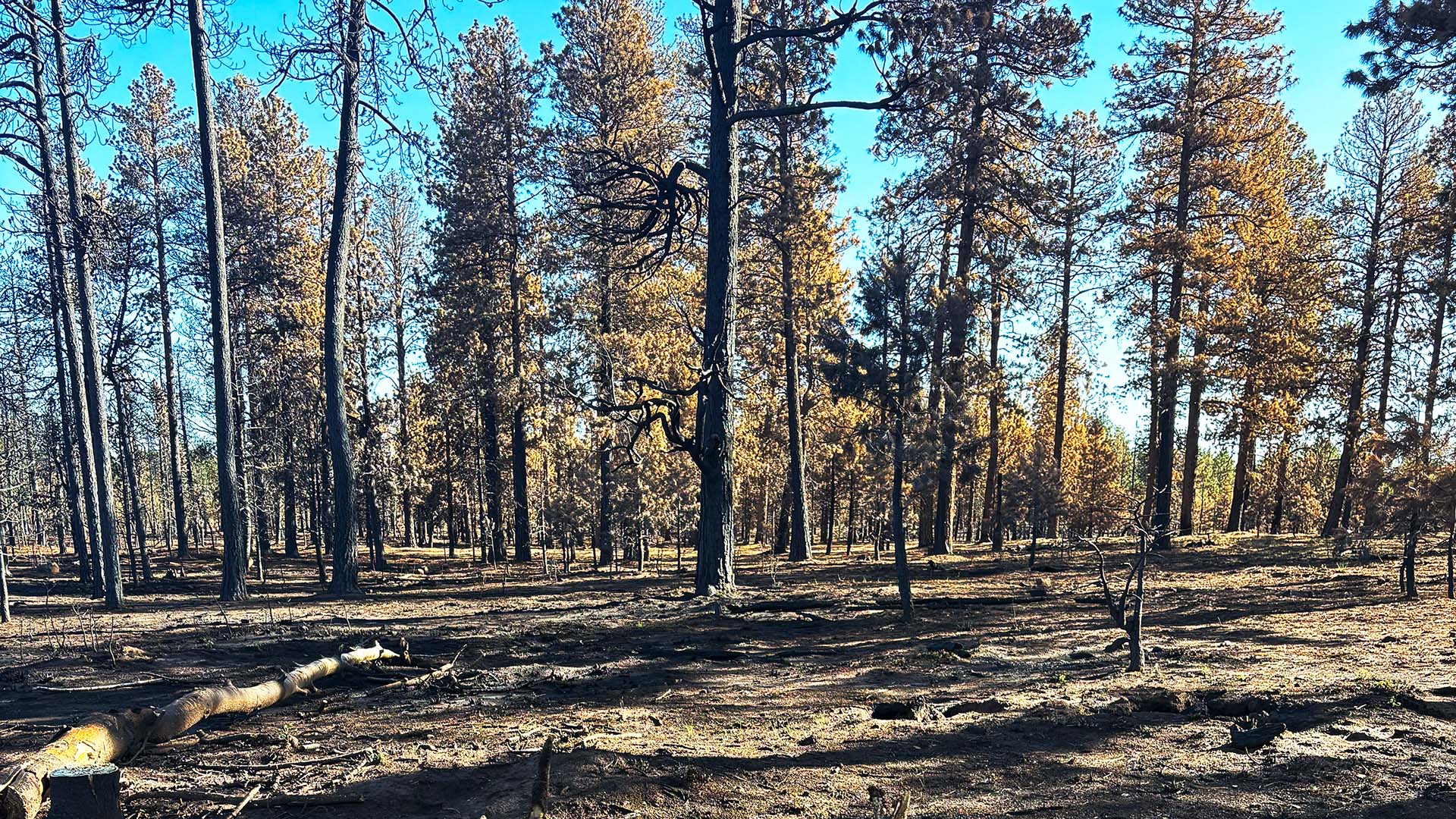
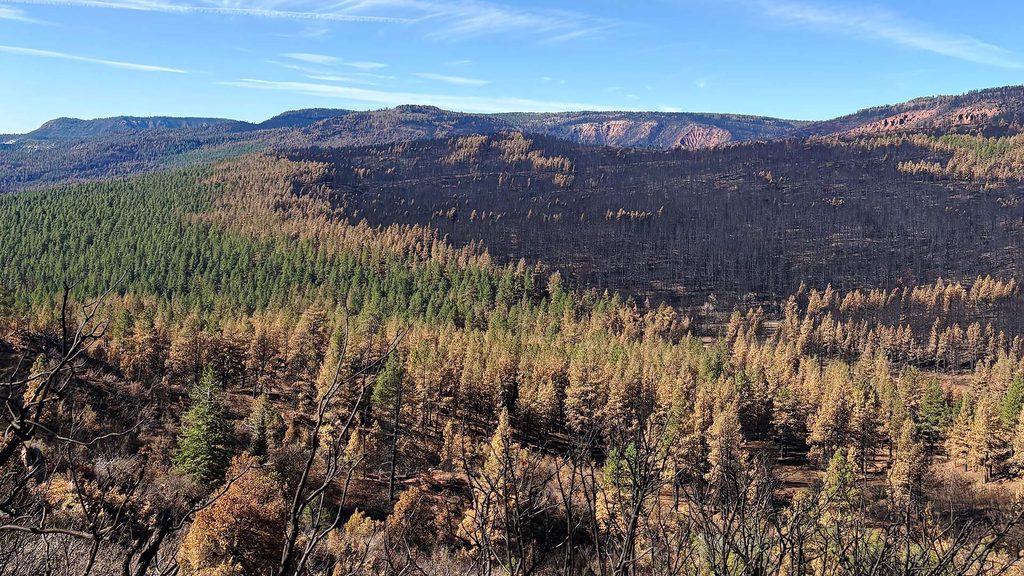
Blue Mountain burned this summer, and the people in San Juan County, Utah who live beneath it are still living with what came after. Evacuation notices went out. Weeks of smoke settled over small towns like Monticello and Blanding. Favorite cabins and favorite places, along with the memories attached to them, were lost. It is still extremely hazardous to travel through the massive burn scar. The Manti-La Sal National Forest has now proposed a recovery plan covering about 95,160 acres of the burn, and BlueRibbon Coalition (BRC) supports it. Comments are due by 11:59 PM MST on November 3, 2026.
What happened
The lightning-caused Babylon Fire started June 26, 2026, in the Abajo Mountains, about 25 miles southwest of Monticello. It burned across parts of Elk Ridge, Dark Canyon Wilderness, and Bears Ears National Monument. The Forest Service’s final report lists it at 107,189 acres and 100 percent contained. The Monticello Ranger District closure order was rescinded on August 20, 2026, and the area reopened. Stage 2 fire restrictions were still in place that day, including a ban on driving or parking off designated routes.
BRC believes the fire moved so fast in part because Wilderness and other areas closed to vegetation treatment and multiple use left the landscape more vulnerable. The recovery plan stays out of those places. It says no actions prohibited by the 2001 Roadless Rule would happen in inventoried roadless areas, which means no road reconstruction, timber harvest, or tree cutting there, and no prohibited actions in Wilderness. BRC sees that as one more reason the Roadless Rule should be fully rescinded. We were told over and over again that the Roadless Rule still allows treatment, and here we have yet one more project that shows these assurances are nothing more than empty promises.
What the Forest Service wants to do
Clear the fuel. Crews would remove the brush and small trees that feed fires, by hand and by machine, through piling, chipping, mastication (grinding brush into mulch), and biochar.
Harvest burned timber. The plan covers dead and damaged trees, plus trees judged likely to die within five years based on scorched crowns, charred bark, and beetle activity.
Fix the trails. Fire-damaged trails would be repaired, rebuilt, or moved, including bridges, boardwalks, and retaining walls.
Fix the roads. Roads would be graded, drained, and rebuilt, with culverts replaced, to restore access for the Forest Service and the public.
Build only what the work needs. Temporary roads would be built only where treatments require them, then recontoured and removed.
Replant. The forest would use planting, seeding, and natural regeneration to bring back tree cover.
Roadless and wilderness. The DAR says no actions prohibited by the 2001 Roadless Rule would occur in inventoried roadless areas. Lack of treatment in these areas beforehand is what contributed to the rapid spread of this fire. This is one of many reasons that a full rescission of the 2021 Roadless Rule is so crucial to the future viability of our forests. That means no road reconstruction, timber harvest, or tree cutting there. It also says no prohibited actions would occur in Wilderness.
Monument Restrictions. We have seen anti-access groups criticize this project and demand that it comply with monument restrictions. Many of these restrictions are questionable since President Trump shrunk the monument boundaries in July. However, these demands demonstrate that those who fought hardest for a restrictive monument and the restrictive 2025 plan are using these restrictions to oppose replanting trees, fixing trails, reducing fuel loads, and removing burned timber. Monument supporters regularly leave out that active management activities like these are the target of their so-called protections.
How fast this is moving
This is an emergency action under the 2022 Infrastructure Investment and Jobs Act, so it skips the usual objection period before a decision. There is also no project-specific environmental assessment. The Forest Service’s draft finding of no significant impact relies entirely on the national Post-Fire Recovery Environmental Assessment completed June 26, 2026. Forest Supervisor Barbara Van Alstine is the responsible official, and her draft decision says work would begin no sooner than November 6, 2026. BRC applauds the agency for acting this quickly.
Why your comment matters
Road and trail repairs are what turn a reopened forest into one people can use. Because there is no objection period, this comment window is how you get on the record. We have already seen anti-access groups oppose this project, so we need to create a counter-balance to their efforts. Comments are due by 11:59 PM MST on November 3, 2026!