On May 29, President Trump rescinded the Nixon and Carter era Executive Orders that agencies used to restrict OHV access to public land for 50 years. This was a pivotal moment for those of us who have been fighting tooth and nail for decades to prevent, or even slow down, the never ending tightening ratchet of closures. One of the most effective tools for closing public land is no longer in the toolbox. Arguably, the ratchet itself was removed.
The tool is gone. But thousands of miles of trail are still locked down under previous ratchet-tightening projects.
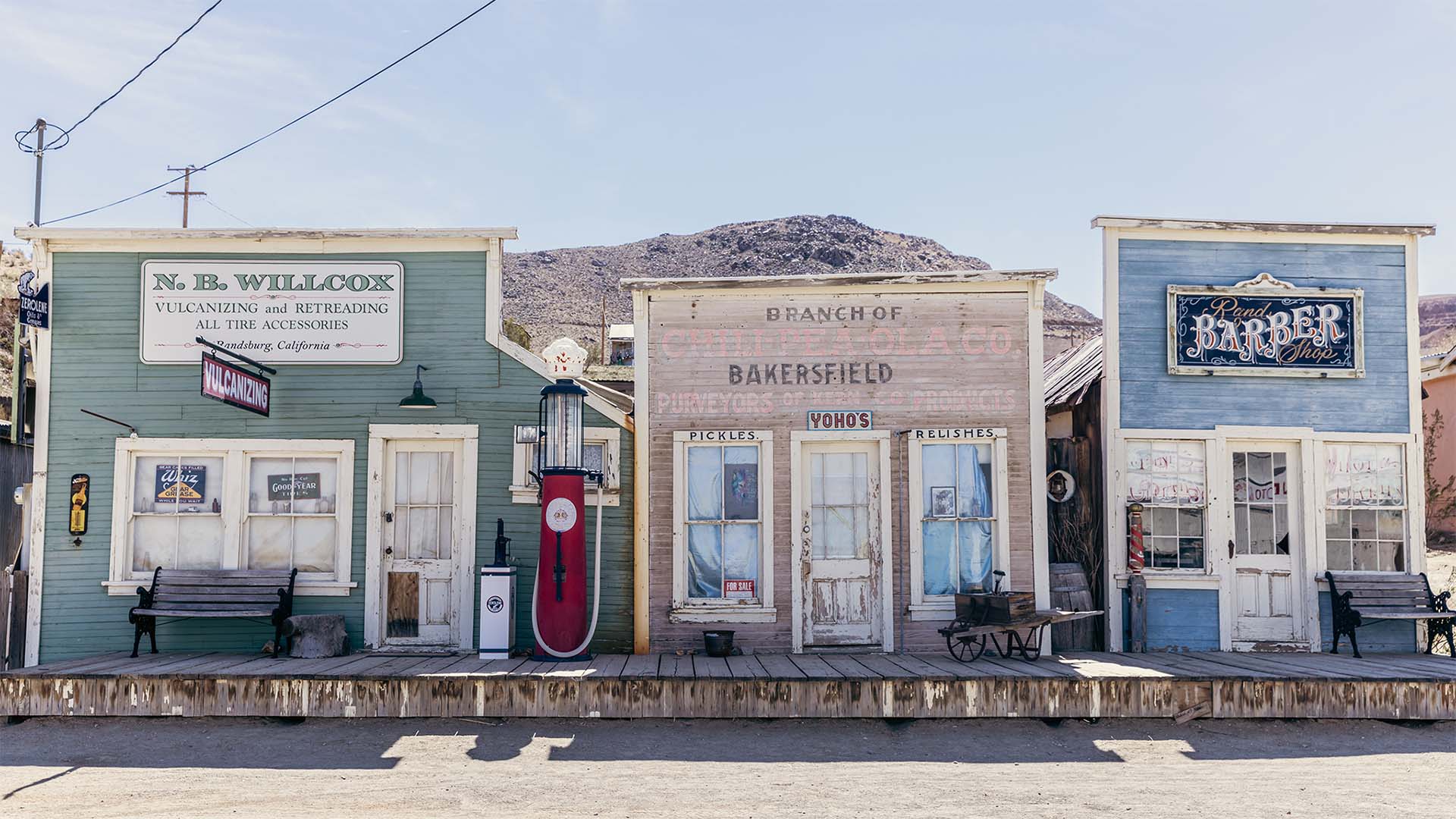
Closures were never only about riders. In early July BRC Executive Director Ben Burr told Congress what the 2,200 mile WEMO closure is doing to Randsburg, California, a small mining town in the western Mojave.
"The fuel stops, the diners, the motel, and the repair shops. They live on the people who come to ride these very dirt trails that were closed. A business that loses a season doesn't come back when the gates reopen."

Every closure has a Randsburg— a town where the tank of gas, the burger, the motel room, and a tire bill are what keep the lights on. For 50 years those towns absorbed the cost of a regulation stretched past its original purpose by litigious anti-access organizations.
That regulation is gone. Here is what it will look like to untighten these ratchets and what it means for the towns at the end of the trail that get us home.
First, there will be no free-for-all
The one thing that definitely will not happen is an OHV free-for-all where any motorized vehicle can go wherever it wants.
One of the justifications for rescinding these Executive Orders is that new laws have been passed since the orders were signed that already give agencies the authority to manage and regulate access. Those laws are still in effect. Plans that have already been formally adopted also stay in effect until they are replaced by new plans built under a framework that does not include the minimization criteria.
If you see a group (usually anti-access orgs) claim this change will lead to an unchecked free-for-all, share this post with them. Flood their comments with links to it. Demand that they prove what they are claiming.
Prediction: they will not do it.
They will hide behind carefully curated talking points, and they will not have a substantive discussion to back up their claims. They know that if they repeat the same message frequently enough, and loudly enough, they can convince people who have not read the order that this leads to the wholesale destruction of public land.
It does not. Here is our best assessment of how this actually plays out.
Step one is a federal rulemaking
The first step was announced in the Trump Order itself. We do not need to convince you of this. You can go read the order. Here is the money quote:
The federal agencies that adopted minimization criteria regulations to implement the Nixon and Carter Orders will need to administer a federal rulemaking to formally rescind those rules. This will be a formal action published in the Federal Register, and there will be a public comment period to influence how the agencies choose to replace regulations that are no longer valid.
So instead of a Mad Max free-for-all of mutant off-road vehicles tearing up your favorite landscape, there is going to be a federal rulemaking.
There will be no substantive changes before that happens. It took 50 years to get into this mess, and, unfortunately, it is going to take time to get out of it. But we know communities can't wait on timelines the U.S. government runs on. Every year of that process is another season a Randsburg business has to survive without the customers the trails used to bring. BRC is actively pushing for swiftness across all available channels.
Once the rulemaking is complete, the new rules will apply to every agency planning action affecting access to public lands going forward. That is where the first rubber hits the two-track. Our policy team is already gearing up to make sure the new rules are applied effectively to new plans, and we believe the result will be a lot more of our existing trails staying open.
Again, this is not a free-for-all. We will simply no longer face a regulatory ratchet that justifies excessive closures.
To be transparent: closures are still possible. But there will likely be fewer of them, and they will need to be rigorously justified under other laws: the Endangered Species Act, FLPMA, the Archaeological Resources Protection Act, the Wilderness Act... You get the idea.
Anti-access groups will change tactics. We will still have to fight for access harder than we should have to for simply wanting the public benefit of recreating on our public land. But the fail-safe, catch-all tool used to close trails from Moab to the Mojave is no longer available.
What This Means for WEMO & Randsburg
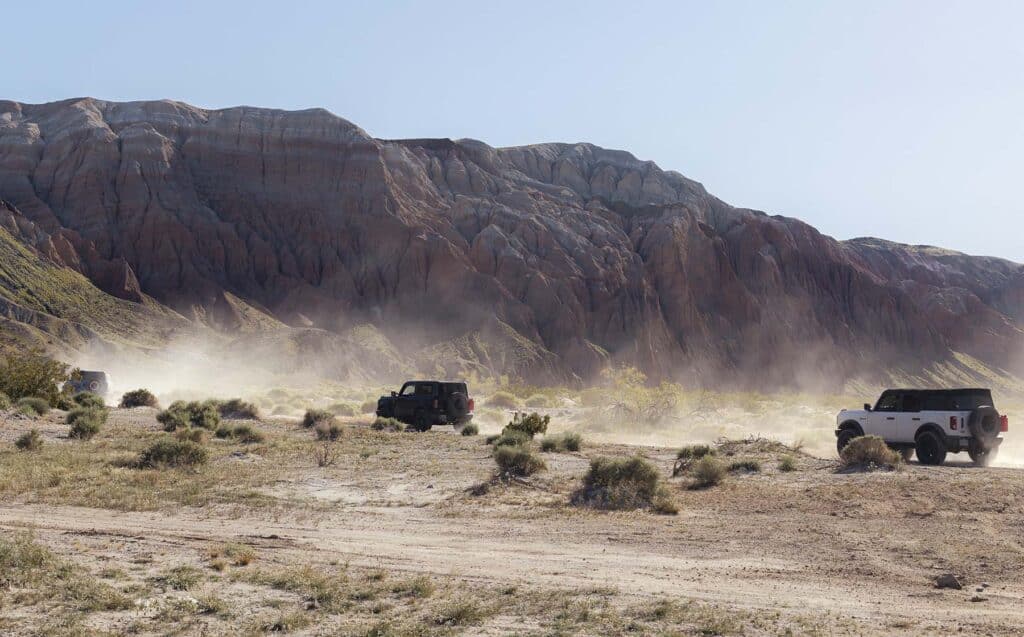
The WEMO decision closed 2,200 miles of routes in California's western Mojave Desert, and it will likely be the first closure where the loss of minimization criteria has a tectonic effect. The judicial decision to close those routes rested almost entirely on non-compliance with the minimization criteria. The legal ground under that closure just moved.
The decision required the BLM to create a new travel plan within three years! What blew the BRC hat off of your head in Barstow wasn't the 70 mph wind. It was the staff of the local BLM office sighing a collective breath of relief that they can finally complete a plan that doesn't have to comply with Judge Illston's impossible interpretation of regulations that are no longer in effect.
The fastest solution for WEMO: There is an active early-stage appeal in the 9th Circuit Court of Appeals. BlueRibbon Coalition did everything we could to intervene and the court denied our intervention. Despite that setback, the Trump Order should give the Department of Justice the basis it needs to explore a partial stay on the lower court's closure order. This is the only path that could reopen routes in time to make an impact on what's left of this season.
The second option is considerably longer: A new travel plan. The court ordered BLM to produce a new WEMO travel plan within three years. Fortunately, with the rescission of minimization criteria, we can finally expect the BLM to draft a plan built on analysis already performed at the level of overkill. But it takes time. That is good news for anyone with the patience to wait out federal bureaucracy, along with the legal challenge that will probably follow from the Center for Biological Diversity.
But communities don't have the time that governments do. As Ben told Congress in the video above about that three-year deadline: "The last time they did this, it took over 10." Ten years is not a planning horizon for a diner with four employees. It is a closing notice.
That is the part of this story that gets lost in the mileage counts. The BLM will eventually write a plan. The Center for Biological Diversity will eventually sue over it. Randsburg has to make payroll in the meantime.
The Trump EO should give the DOJ the basis it needs to help Randsburg. This is the miracle we should all be praying for. Then BlueRibbon Coalition can focus on assisting the BLM in deciding a new long-term plan for the WEMO trail system.


The same logic reaches Moab and beyond
WEMO is the most immediate closure affected by this change. It is not the only one.
Consider Moab. We are waiting on a BLM decision reassessing the 317 miles of trails closed in that travel plan, and it could come any day. Any decision reopening those trails would have faced a boilerplate legal challenge from SUWA claiming the reopening failed to comply with the minimization criteria. Their prospects for that challenge are now significantly weaker.
The same logic holds for the San Rafael Swell, the Henry Mountains, and a series of other travel plans that closed trails, and with them, a significant reason visitors stopped in Green River, Hanksville, and every other town where a closed route means fewer vehicles in the parking lot.
The Fight's Not Over
Making sure these changes lead to a durable reopening of our biggest closures is one of BlueRibbon Coalition's highest priorities for the coming months and years. Not just for riders, but for the towns at the end of the road that have absorbed the cost of these closures for 50 years. We're going to need your help. There will be comment periods. There will definitely be lawsuits.
We're here for the long term. And we're able to stay here because you step up. Thank you.
Shop the latest from our webstore...
Proceeds support our fight for WEMO.