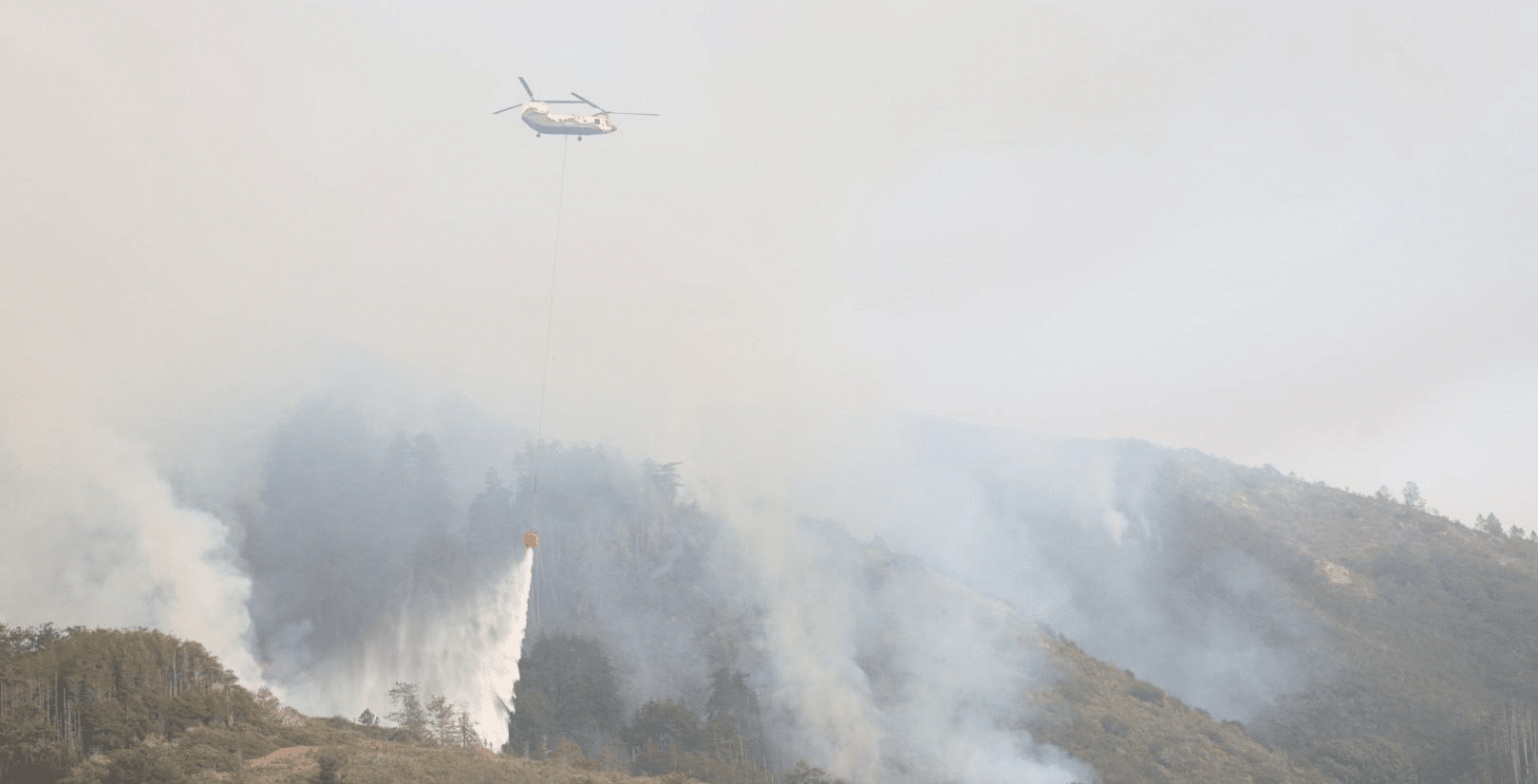
Fight it, shrink it, run out the clock, and watch it burn. For three years Los Padres ForestWatch has worked to reduce the Forest Service's Wildfire Risk Reduction Project by more than 80 percent and to force it back to the starting line with a demand for a full environmental impact statement. The project was written to build fuel breaks and defense zones around California's central coast from Santa Barbara to Big Sur. Today the Timber and Plaskett fires are burning across that landscape, have closed 54 miles of Highway 1, and have shut the entire Monterey Ranger District to the public. BRC's Executive Director appeared on a PBS Documentary to warn of this outcome, and now it is here.
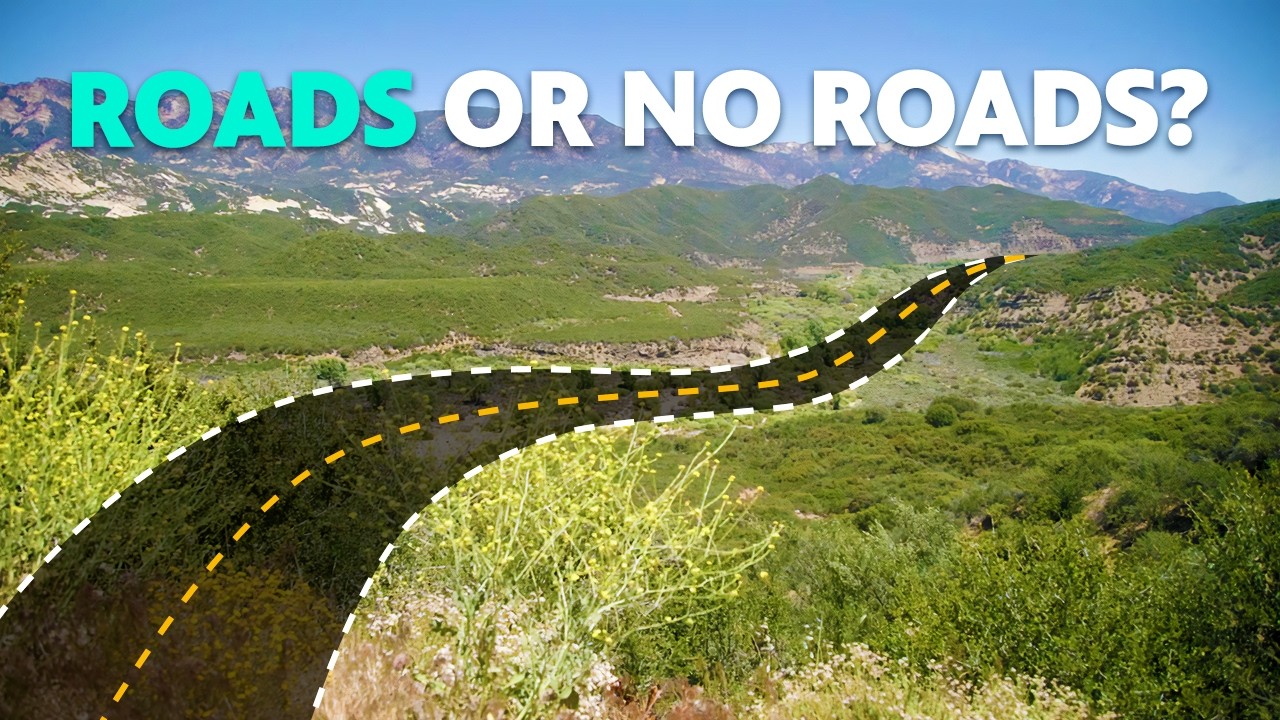
The same rerun, a different forest
BlueRibbon Coalition's NEPA Jail Litigation tracker was built to expose a common pattern occurring on our public lands. Foresters and local partners spend years mapping the ground most likely to burn and design the treatment meant to reduce wildfire risk. Then a local group shows up with self-proclaimed intentions to protect the environment. The plan is worked through the environmental review process where it is challenged, whittled down, or buried under demands for more process until the fire everyone anticipated arrives and does to the forest what no fuel break ever could.
The Timber and Plaskett fires burning in the Big Sur country of the Los Padres National Forest are the latest installment in the yet to be produced documentary about how management-free management in Roadless areas and Wilderness is failing our forests by creating an opportunistic environment for extractive serial litigation. The organization working hardest to keep the region's largest-ever wildfire mitigation plan from being adopted and implemented the way the Forest Service designed it is the same one that has regularly challenged this forest's fuels projects: Los Padres ForestWatch.
What is burning
The Timber Fire started the night of August 8 southeast of Loma Vista and has since grown to roughly 25,000 acres, with containment stalled around 20 percent nearly three weeks in. CAL FIRE lists it among the most destructive wildfires in California this year. More than 660 structures have been threatened. Crews have been running firing operations around primary residences and critical infrastructure along the Highway 1 corridor, and the fire has backed down out of the high country into the Big Sur River drainage. As expected, much of its worst behavior has been deep in the Ventana Wilderness, on terrain too steep and too remote for crews to safely work.
The Plaskett Fire ignited August 26 near the community of Plaskett, about 20 miles south, and exploded from a footprint of a few hundred acres to more than 8,000 with zero containment inside a few days, driven by uphill runs and torching through heavy, untreated fuel. It is now over 26,000 acres and 1% contained. Together the two fires have closed a 54-mile stretch of Highway 1 and prompted an emergency closure of the entire Monterey Ranger District.
This is the landscape the Wildfire Risk Reduction Project was written to help defend. Since most of this area is designated Wilderness, the USFS started with its hands tied behind its back. And it is now the landscape Los Padres ForestWatch has spent three years trying to put the USFS into a straight jacket, with chains, and padlocks, with its legs shackled together, then locked in a trunk, and tossed into the deep end of the Pacific Ocean.
The background facts
The Forest Service proposed what it now calls the Wildfire Risk Reduction Project in 2022, originally covering some 235,000 acres across six counties. After scoping, the agency removed roughly 144,000 acres from the plan. Los Padres ForestWatch takes public credit for this reduction. In April 2025 the Forest Service released the draft environmental assessment for the remaining 90,796 acres across the Monterey, Santa Lucia, Santa Barbara, and Mt. Pinos districts, describing a program of fuel breaks, defense zones, and vegetation treatments meant, in the agency's own words, to establish "fuelbreaks, defense zones" and improve the odds of containing a fire before it reaches a community.
During the comment period, ForestWatch organized 91 conservation, tribal, and community groups behind a joint letter asking the agency to shrink the project dramatically and to prepare a full environmental impact statement rather than the lighter environmental assessment. The organization is endorsing a "Community Alternative" that reduces the Forest Service plan by an additional 83 percent and strips out treatments in the backcountry and on the district peripheries. A decision was anticipated by the end of 2025, with implementation slated to begin in early 2026.
The public record is clear on this. The plan was written. It was substantially reduced once. ForestWatch is working to cut it by 83 percent more and to send it back for years of additional analysis. And as the Timber and Plaskett fires burn, the Monterey District's community-protection work was never even started after years of delay.
ForestWatch will point out, correctly, that it has not obtained a court injunction against this project. It doesn't need one. The demand for a full EIS and the campaign to gut the treatment footprint do the same work an injunction would, without the risk of losing in court. ForestWatch will also point out, incorrectly, that the purpose of the Wildfire Risk Reduction Project is a commercial logging plan. What no one will point out except BRC is that the treatment areas they want removed are all located in designated Roadless areas, because they need to public to believe the lie that forest management is still possible in Roadless areas.
What the Forest Service said this plan was for
The agency wrote down the purpose of this work before any fire arrived. The Wildfire Risk Reduction Project, in the Forest Service's project record, is designed to increase community and infrastructure protection and to create wildfire containment opportunities by establishing fuel breaks and defense zones near communities. The Monterey District portion is built around exactly that logic: because most of the district's interior is designated Ventana Wilderness, where the law forecloses mechanical treatment, the draft concentrates fuel breaks on the district's periphery — the community edges and the road corridors where crews would need to make a stand.
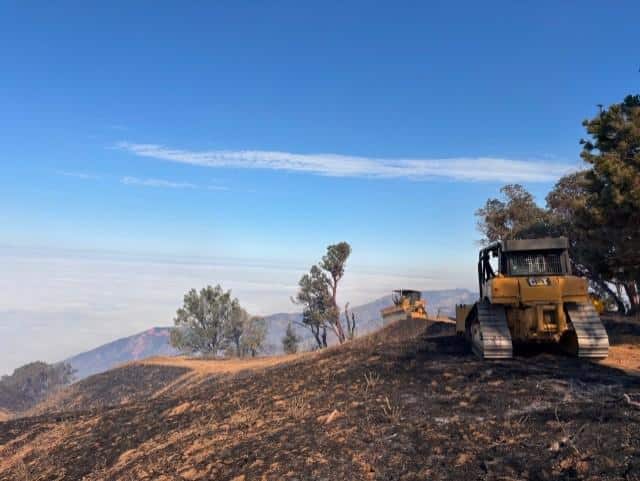
Fuel breaks near communities. Defense zones along the roads. Containment lines built before the fire, not bulldozed in a panic during it. That was the plan. What is happening instead is the panic version: hand crews and dozers cutting emergency line in heavy fuel, firing operations lit around Big Sur homes, and 54 miles of Highway 1 closed with no schedule for reopening. But mostly, everyone is just engaging in Los Padres ForestWatch's preferred forest activity: Watching it burn.
And the fire breaks are now being built anyway.
This is about a pattern, not a project
ForestWatch would like each of these fights treated as a standalone dispute about a single project. It isn't. It is a decade-long method applied to this forest's fuels work again and again.
ForestWatch and its partners sued to stop the Reyes Peak / Pine Mountain fuels project — a treatment sold on the same wildfire-resilience rationale — and lost, with the Ninth Circuit clearing the project to proceed. They challenged the Cuddy Valley project on the theory that fuels work near Mt. Pinos might increase rather than reduce local fire risk. The through-line is a fixed conviction that thinning and fuel breaks in areas not located on the immediate edge of town don't work, and a willingness to use comment campaigns, EIS demands, and litigation to block all forest management.
That conviction runs straight into the Big Sur coast. ForestWatch's own argument for its Community Alternative is that treatments should be focused "close to communities, where they are most effective." Big Sur, Post, Lucia, Gorda, Plaskett — these are the communities. They sit inside the Monterey District the plan covers. And they are the places now under evacuation order and firing operations while the plan designed to protect them sits on the shelf.
How the delay actually works
Litigation and its shadow don't have to win in court to work. An EIS demand adds years to a project by design. A campaign that recruits 91 organizations and floods a comment period signals to an already cautious agency that this project will be a liability the moment it issues a decision. And an organization with a standing litigation record on this exact forest doesn't have to file a new complaint for the agency to feel the threat of one; it plans around it.
The result is an agency that pads the record, drops the units most likely to draw a challenge, and slows to the pace of its own legal caution. The Reyes Peak history is instructive: even when ForestWatch loses in court, the project spends years tied up before it can proceed, and every one of those years is a year the fuel keeps building. Keeping a treatment stranded between "approved" and "implemented" is worth as much to an anti-management campaign as any injunction, because the fuel load doesn't care why the work didn't happen.
The funding excuse
ForestWatch and the agency both note that funding uncertainty will shape where and when the Wildfire Risk Reduction Project actually gets built. Expect that to become the explanation for why the Monterey District work wasn't on the ground before this fire: not the 83-percent-cut campaign, not the EIS demand — just money.
But an organization genuinely worried that the agency was too starved to act would not be spending that same agency's scarce planning capacity fighting to force a years-long EIS and to strip 83 percent of the treatment acres. Whether the community-edge fuel breaks go unbuilt because the budget ran short or because the process never ends, the fuel load surrounding the Big Sur communities is identical.
The most predictable outcome everyone saw coming
The Timber Fire's most extreme behavior came inside the Ventana Wilderness, on ground fire officials called too steep and too heavily fueled for crews to work. That is not incidental. Congressionally designated Wilderness is precisely where the law forecloses the mechanical treatment that might have moderated what is now burning. This is exactly why the Forest Service had to push the Monterey District's fuel breaks out to the periphery in the first place.
So the plan's designers did the only thing the law allowed: build the defense on the community edge, because the interior can't be touched. ForestWatch's Community Alternative would thin that peripheral work down too. The interior burns because non-management guaranteed the fuel load, and the campaign against the plan would shrink the one ring of defense the law still permits. The wilderness core did what unmanaged fuel does in ideal fire conditions, and the fire ran hardest exactly where no one was allowed to do anything meaningful to prepare against it.
The access that went with it
There is a second bill, and every person who uses this forest pays it.
The Los Padres National Forest closed the entire Monterey Ranger District under Forest Order 05-07-51-26-10, effective August 29 and running until the fires are declared out. Every National Forest System road and trail in the closure area is off-limits, with only narrow exceptions. On top of that, the California Highway Patrol has closed 54 miles of Highway 1 along the Big Sur coast. This road is the only access for this stretch of coast and the artery the local visitor economy runs on. As is often the case, this road is now the most functional containment line for both fires.
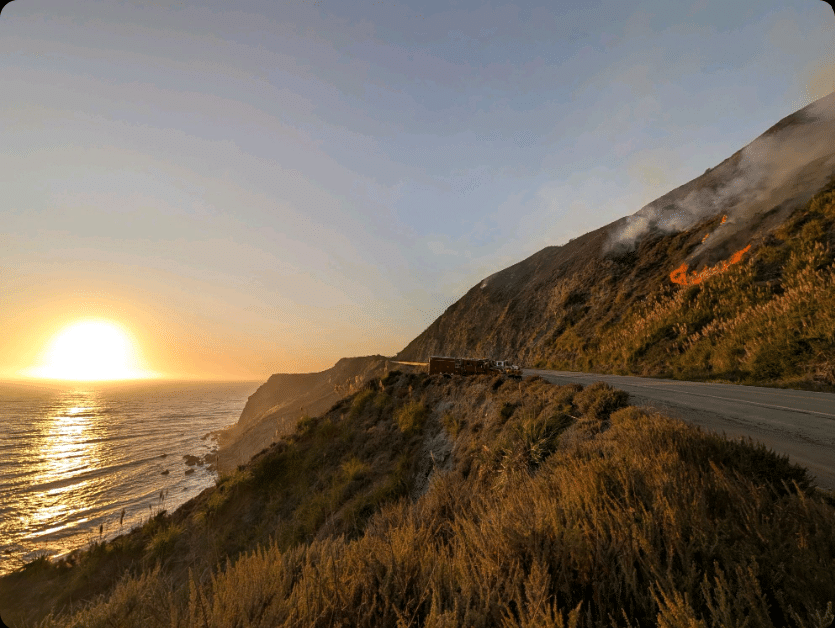
A road inside a burn scar does not reopen the day a fire is called contained. Hazard trees have to come down. Culverts and drainage have to be assessed — hopefully before the mudslides wipe out mountainsides and destroy the road for years. Reopening happens on the agency's schedule, with the agency's staff, long after the smoke clears. And groups like Los Padres Forestwatch and their 91 allies stand ready to challenge the post-fire reclamation project and salvage projects just like they challenge the wildfire risk reduction projects. The trail you hiked, the campsite you booked, and the coastal highway you planned to drive this fall, are off limits until further notice.
The record we're keeping
The Wildfire Risk Reduction Project belongs in the same ledger as every other fuels treatment that foresters designed, communities backed, and process consumed while the acres waited for ignition. That ledger is why BlueRibbon Coalition built the NEPA Jail tracker. This is a running record of the treatments stranded between approved and implemented, and of the organizations that keep them there.
ForestWatch's Los Padres record earns it a place in that file: the lost Reyes Peak suit, the Cuddy Valley challenge, and now a three-year campaign to shrink and slow the largest wildfire mitigation plan in this forest's history as the Timber and Plaskett fires burn across the ground the plan was designed to protect.
When a campaign against management overrides the judgment of the foresters and communities who actually tend these lands, someone pays, and it isn't the campaigners. The bill is paid by the firefighters cutting line by hand on slopes no dozer can reach. It is paid by the Big Sur communities under evacuation order tonight. It is paid by every family who planned a drive up Highway 1 this fall. And it is paid by every taxpayer who funds both the suppression bill and the endless process that guaranteed there was nothing built to stop the fire.
If you value this kind of reporting and the NEPA Jail tracker that holds anti-management organizations accountable, consider a tax-deductible donation today. It takes a team to investigate, research, advocate, and litigate for the right to protect and access our public lands.