
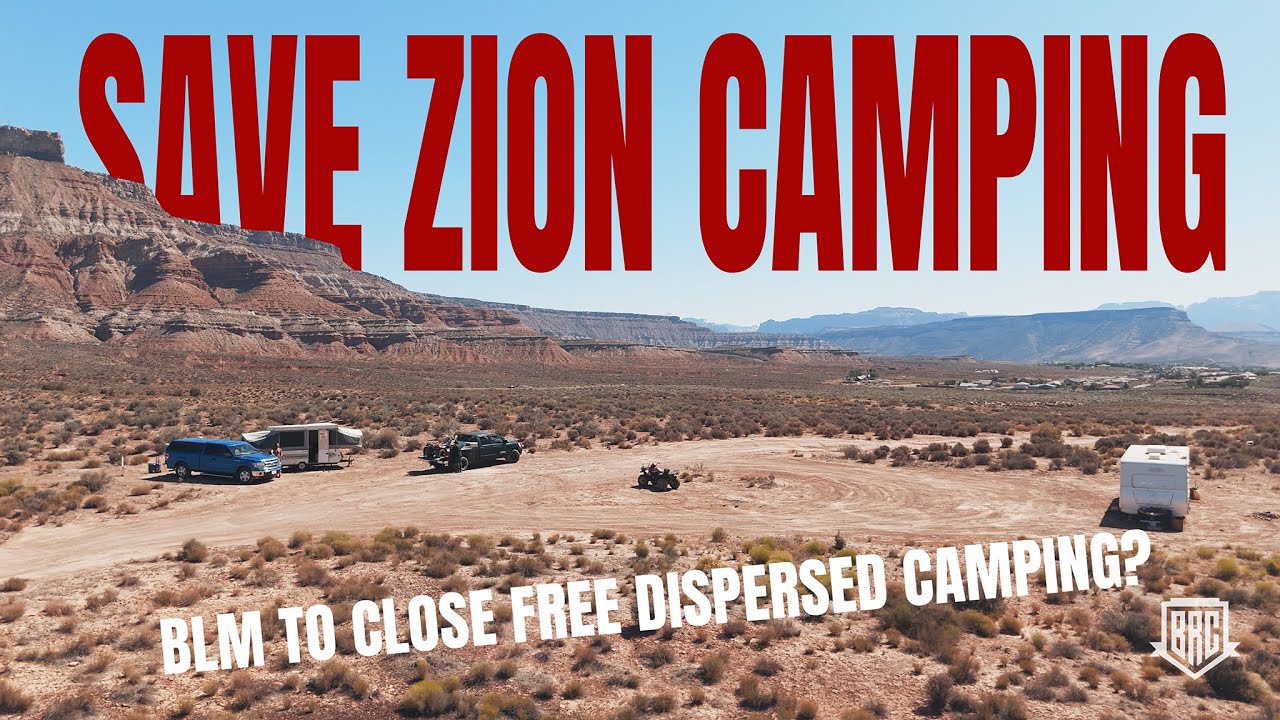
We warned you this was going to happen... The Bureau of Land Management has officially released an Environmental Assessment for the SR9 corridor in southwestern Utah, proposing sweeping changes to how camping is managed on nearly 14,000 acres of public land near Zion National Park, Gooseberry Mesa, and surrounding recreation areas. Earlier in 2025, BRC called on it's members to submit comments in support of continued free, dispersed camping.
While BLM frames the proposal as a way to address increased visitation and resource impacts, the plan would significantly restrict free dispersed camping, displace long established public use, and create new user conflicts without guaranteeing the infrastructure needed to offset those losses.
Overview of the Proposal
Under the Proposed Action, BLM would transition large portions of the SR9 corridor to a “limited to designated camping” model. This would eliminate the ability to camp freely across most of the project area which happens to be next to one of the most visited national parks in the nation, Zion National Park, and confine visitors to a small number of designated dispersed sites and future developed campgrounds.
Key elements of the proposal include:
• Limiting camping to designated dispersed sites across approximately 13,943 acres
• Allowing only up to 30 designated dispersed campsites in the project area
• Closing camping entirely in North Creek, Mosquito Cover, and Smithsonian Butte
• Restoring and reclaiming nearly 60 acres of existing user created campsites and access routes
• Planning for up to 80 potential campsites on roughly 80 acres at Gooseberry Mesa, with no guarantee they would be built
• Retaining agency discretion to establish camping fees in the future
Loss of Dispersed Camping
One of the most concerning aspects of the proposal is the sheer scale of camping restrictions. Nearly 14,000 acres would be limited to designated sites, effectively ending traditional dispersed camping across most of the SR9 corridor.
BLM proposes closing and reclaiming 30 existing designated dispersed campsites that were previously analyzed and constructed within the Hurricane Cliffs Recreation Area. Additional restoration would eliminate long used camping areas along the Smithsonian Butte Scenic Byway, Gooseberry Mesa, and North Creek.
Once reclaimed, these areas would no longer be available for public camping, even though many have been used responsibly for decades.
Uncertain Infrastructure and Increased User Conflict
BLM suggests that future developed campgrounds could help offset the loss of dispersed camping, but those facilities are not guaranteed. The EA makes clear that campground development would occur later, if funding becomes available.
Even under full build out, the proposal only “could” result in up to 150 total campsites across the entire corridor. There is no requirement that all of these sites ever be constructed.
This creates a real risk of user conflict. Visitors would lose access to thousands of acres of camping opportunities immediately, while replacement sites may never materialize. Fewer sites combined with higher visitation will inevitably push users into smaller areas, increasing congestion, competition, and enforcement pressure.


Potential for Fees and Reduced Access
Although the proposal currently references free dispersed camping, the EA explicitly states that BLM retains the discretion to establish fees in the future. Once camping is limited to designated sites, fee implementation becomes much easier, raising concerns about long term affordability and access for families, hunters, OHV users, and local residents.
BlueRibbon Coalition does not support broad restrictions on free dispersed camping as a default management strategy. Dispersed camping is a long standing and lawful use of public lands, and eliminating it across vast areas should be a last resort, not a starting point.
This proposal would permanently close large areas to camping, reclaim established sites, and concentrate use into a limited number of locations without guaranteeing replacement opportunities. That approach reduces access, increases conflict, and undermines the public’s ability to responsibly enjoy their public lands. Let the BLM know what you think! We only have until December 24th to get our comments in via the form below.