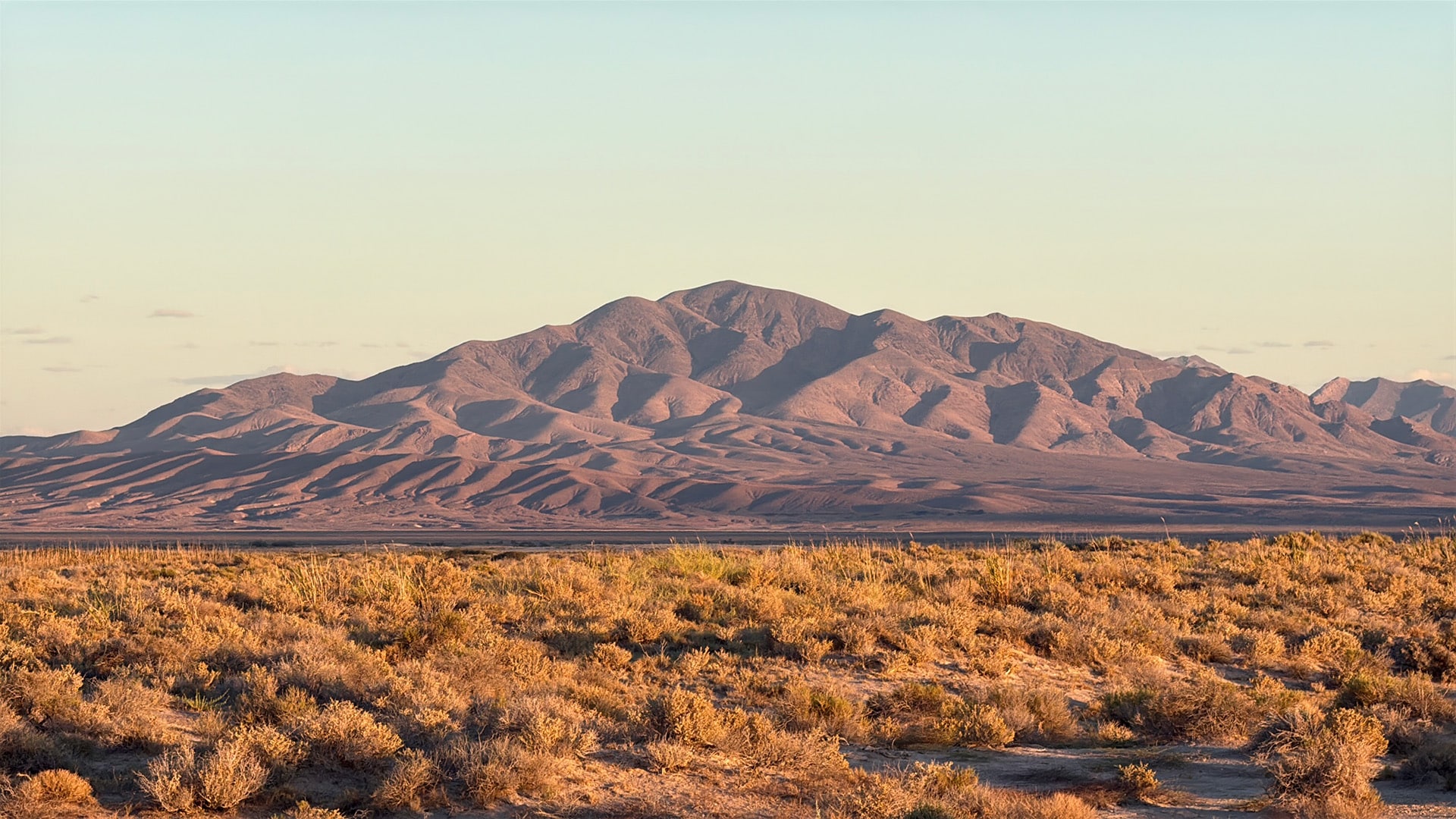
A new push is underway in Nye County, Nevada, to designate roughly 186,000 acres of BLM land around Ash Meadows National Wildlife Refuge as the "Ash Meadows National Conservation Area." The Amargosa Valley Town Board passed a resolution backing the idea on March 26, 2026, the Amargosa Conservancy is leading the campaign, and the Nye County Commission has voted to support it. No legislation has actually been introduced in Congress yet. This is still a proposal that is in the early stages of development.
The history of NCA proposals in the West follows a pattern that ought to give every public-lands user pause and make them take action to oppose this NCA proposal. An NCA is often not the end point. It's the opening bid.

The NCA-to-monument bait-and-switch
BlueRibbon Coalition has watched this play out again and again: a National Conservation Area is pitched as the "reasonable," locally-driven, multiple-use-friendly alternative — only for the campaign to escalate into a push for a much larger, much more restrictive national monument once the NCA is designated, the proposal stalls or once advocates decide it doesn't go far enough.
Bears Ears, Utah. Before Bears Ears was a monument, it was a proposal for an NCA. Utah's congressional delegation spent years developing the Public Lands Initiative, a roughly 1.4-million-acre national conservation area explicitly designed, in the words of one PLI supporter, to "balance the interests of ranchers, energy developers, environmentalists, hikers and tribes" through local negotiation rather than a unilateral federal designation. When that legislative process collapsed, the response wasn't to keep negotiating — it was to go around Congress entirely. In December 2016, President Obama designated the 1.35-million-acre Bears Ears National Monument by executive proclamation under the Antiquities Act. The locally negotiated NCA compromise was shelved in favor of top-down federal control, and the fight over the monument's size and management has continued in court ever since, including a 2026 Tenth Circuit ruling in Garfield County v. Trump that is still working through what limits, if any, apply to the President's Antiquities Act power.
Dolores River Canyons, Colorado. In 2022, Senator Michael Bennet (D) and Representative Lauren Boebert (R) jointly introduced the Dolores River National Conservation Area and Special Management Area Act, covering about 68,000 acres and explicitly protecting grazing, motorized trail access on the Rimrocker Trail, mountain biking, and existing water and mining rights. That bill stalled. By spring 2023, conservation groups had unveiled a new proposal for a Dolores River Canyon Country National Monument — nearly six times larger, at roughly 400,000 acres, and pursued through the Antiquities Act rather than Congress. By July 2024, Bennet and Hickenlooper's public statements had shifted from championing the NCA bill to saying only that "no matter the tool we use to permanently protect the Dolores, we will follow these principles" — leaving a monument designation squarely on the table. Local opponents have pointed directly at nearby Canyons of the Ancients National Monument as a preview of what comes next: motorized access and recreational shooting there were restricted well after its 2000 designation, and the BLM only finalized a new supplementary rule tightening those restrictions further in November 2024: 24 years after the monument was created.
Rio Grande del Norte, New Mexico. This is the oldest version of the same story. Congressional NCA legislation for the area was first floated by Rep. Bill Richardson in the early 1990s, then revived by Senator Jeff Bingaman starting around 2007. Neither effort passed. After nearly two decades of a stalled legislative process, President Obama designated the 240,000-acre Rio Grande del Norte National Monument by proclamation in March 2013 bypassing Congress, and the give-and-take that a legislative NCA process would have required, entirely.
Three different states, three different decades, the same sequence: propose an NCA, let it stall or decide it isn't enough, then reach for the Antiquities Act instead.
NCA's aren't the safe bet
It may seem that proponents of an NCA are right, "create an NCA or you will get a monument". An NCA isn't a good option either and will hurt recreation, access, multiple use and the local economies. Below are examples of NCA's that haven't become monuments that have restrictive management objectives.
Steens Mountain CMPA/NCA, Oregon (2000). The authorizing act itself permanently canceled grazing permits on the Fish Creek/Big Indian, East Ridge, and South Steens allotments and retired grazing rights across the designated wilderness portions of the area. It also barred motorized and mechanized travel off designated roads. Ranchers who had grazing rights before the NCA didn't have them after. Oftentimes these closures happen later during a land management or travel management process.
San Pedro Riparian NCA, Arizona (1988). Congress designated it specifically to get livestock off the river corridor, and BLM initially banned grazing outright. Grazing crept back in over the following decades through allotment additions and lease renewals. Then, in 2020, conservation groups sued, and a 2022 settlement forced BLM to re-justify grazing on the remaining allotments against the NCA's own protective mandate. It's a useful example both ways: the NCA restricted access at creation, and litigation is still being used to squeeze it further, decades in.
Beaver Dam Wash NCA, Utah (2009). The enabling legislation restricted all motorized vehicle travel, including OHVs, to designated routes only then required a travel plan to be completed, which always leads to closing existing routes.
Red Rock Canyon NCA, Nevada (designated 1990). For its first three decades this was open, drive-in-anytime access. In November 2020, BLM imposed a mandatory timed-entry reservation system for the scenic drive, eight months a year. Visitors now have to book a one-hour arrival window up to 30 days ahead. Nothing about the underlying NCA designation changed; the restriction just arrived on its own timeline, the same pattern the post already makes about monuments.
Restrictions don't stop at the ribbon-cutting
Even when an NCA is what actually gets created, backers routinely promise that grazing, motorized access, hunting, and mineral development will continue largely as before. BlueRibbon Coalition's own tracking of how these designations play out over time tells a different story. At Bears Ears, the area closed to OHV use expanded from 436,000 acres to 637,000 acres, with another 483,000 acres placed under limited-access restrictions, and grazing use has been billed at only about 34,000 of the 60,000 permitted animal units. At Grand Staircase-Escalante, roughly a 31 percent decline in grazing use since it was created in 1996. At Canyons of the Ancients, it took more than two decades, but tighter motorized-access and shooting restrictions arrived anyway, formalized through a supplementary rule as recently as 2024.
The lesson isn't that every restriction shows up on day one. It's that a federal conservation designation whether it's an NCA or a monument, hands management authority to an agency that can, and does, tighten access over time through resource management plans and supplementary rules, long after the local "we'll protect your access" promises that sold the designation in the first place.
Private property and local control, right now at Ash Meadows
Ash Meadows doesn't need to become a monument to show the property-rights and local-control problems this pattern creates time after time. They're already surfacing in the current NCA proposal itself. At a June 2026 town hall, residents told the Amargosa Conservancy its own proposal maps "erroneously encompasses hundreds of private properties" and asked that the errors be fixed and the public given real time to review the boundaries before local governments signed off — after the Amargosa Valley Town Board had already endorsed the proposal on May 5.
It's also worth noting that Ash Meadows already shows the "opening bid" dynamic in real time. Even as the Amargosa Conservancy pushes the NCA route, a separate group called the Friends of the Amargosa Basin is simultaneously campaigning for a full Amargosa National Monument covering much of the same landscape. We are seeing this pattern play out in real time.
The proposed area also includes the Ash Meadows Wildlife Refuge, which has led to conflict and controversy related to water rights in the valley. Now we're seeing that one large protected designation created through forced compromise is always just the starting point for more lock-ups of our federal land.
Local economies pay the bill
NCA and monument campaigns are almost always framed around stopping a specific threat. In the case of Ash Meadows, that's a proposed solar project and renewed mining interest near the refuge. Permanent conservation designations remove land from multiple use for everyone who depends on it economically, including grazing permittees, mining claimants, and the motorized recreation users and small tourism businesses who depend on continued access to public land, not increasingly restricted access to it.
Nye County, like the West End communities near the Dolores, or the ranching families along the Rio Grande del Norte, is exactly the kind of place where these tradeoffs hit hardest. Rural counties with limited private tax base rely on a working mix of grazing, mining, and motorized recreation access to public land. Every acre of new federal restriction is an acre that can't be permitted, grazed, or ridden the way it was the year before.
Help oppose this designation
No bill has been introduced yet, and Senator Cortez Masto has expressed support for protecting Ash Meadows without committing to legislation. If you use, work, or live on the public land, now is the time to get engaged because this could happen to your favorite place to ride next: Submit a letter to your elected officials to oppose locking up 186,000 acres of land in Nevada.