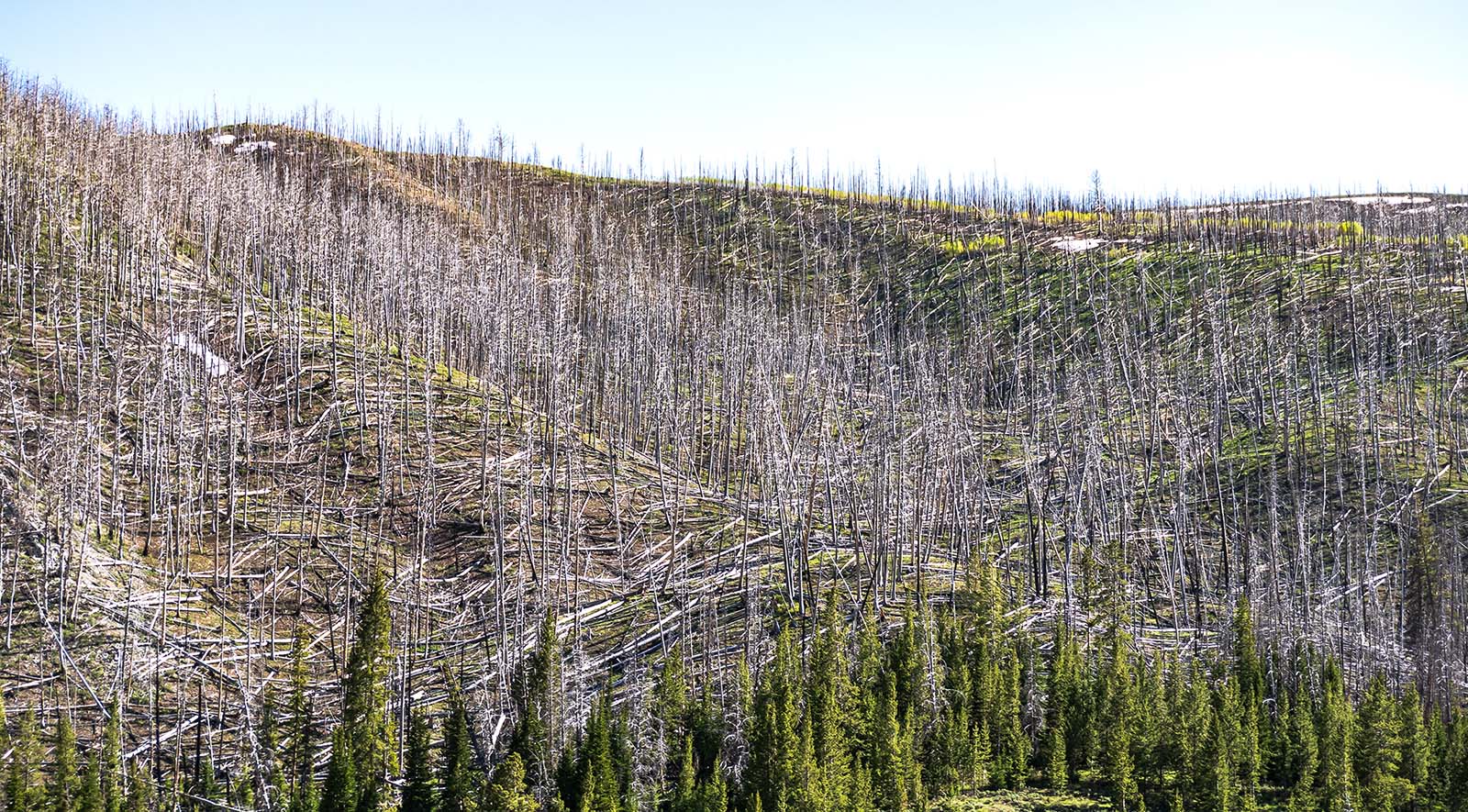
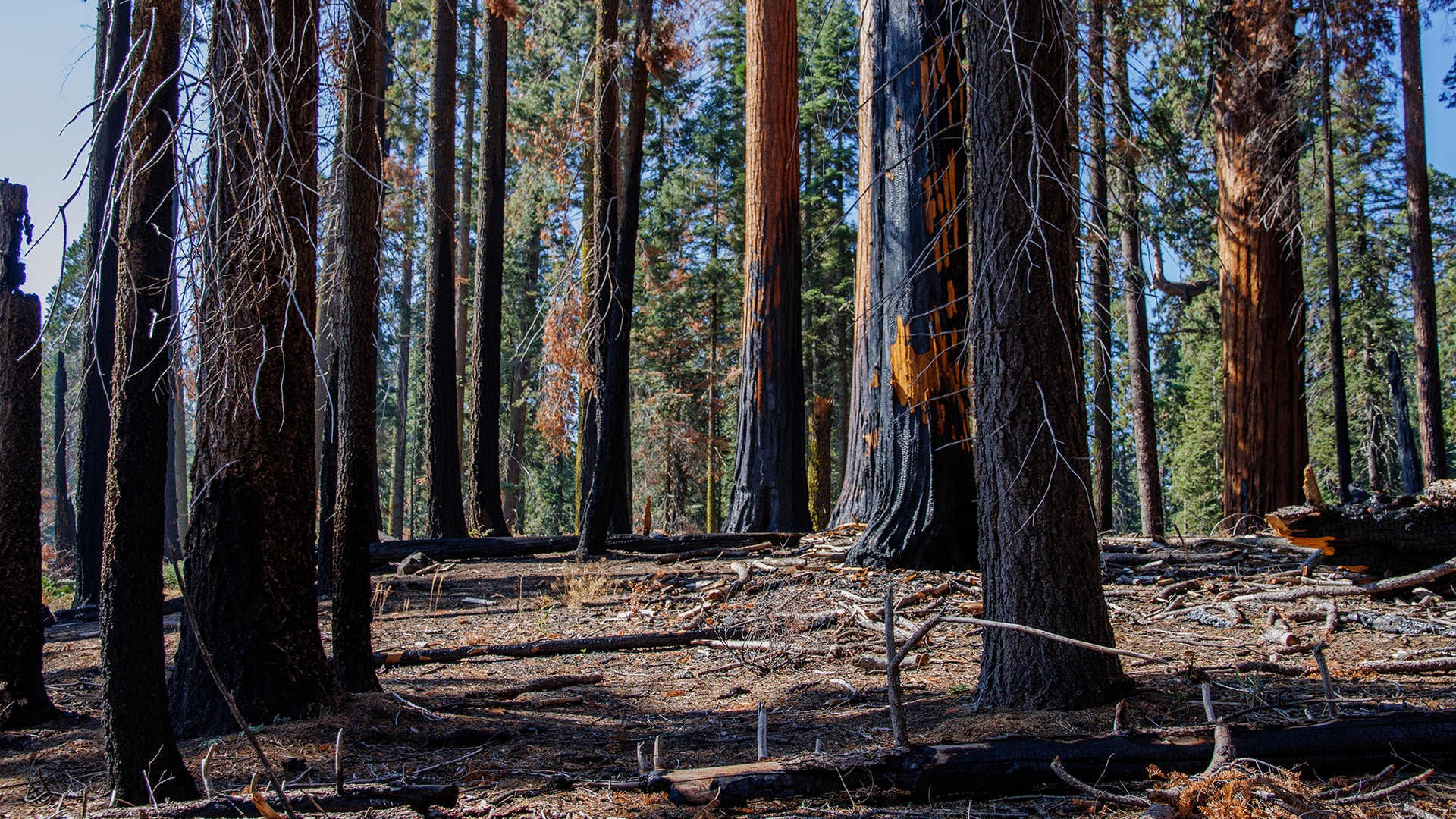
Hug it, litigate it, and watch it burn. That's what happened to one-fifth of the world's remaining giant sequoias as a result of litigation against a salvage treatment project where the litigants went all the way to the Supreme Court, and lost.
The Plain Facts of the Case
In the summer of 2002, the human-caused McNally Fire burned 150,000 acres of the Sequoia National Forest. One year later in September of 2003 the USFS approved the Burnt Ridge Project. The purpose of the project was to salvage dead and burned wood off of 238 acres of the Hot Springs Ranger District. At the time, agencies could exclude projects under 250 acres from extensive environmental review through the use of a legal authority called a Categorical Exclusion. The purpose of this exclusion was to allow the USFS to move quickly to remove salvage wood without having to provide notice, comment periods, and appeal processes that are otherwise required for larger projects.
Enter the opportunistic serial litigants.
Earth Island Institute, Sequoia ForestKeeper, Heartwood, Center for Biological Diversity, and the Sierra Club filed a lawsuit to challenge the use of the exemption regulations both as applied to Burnt Ridge and as applied on their face. They were granted a preliminary injunction by the district court. The USFS decided to settle and agreed to prepare an environmental impact statement instead, or EIS. An EIS requires a substantial level of environmental review and is normally reserved for plans affecting entire forests and major projects. The litigants dropped their claims against the alleged misuse of the Categorical Exclusion on Burnt Ridge, and the 238 acre salvage never happened.
However, they kept their claims that the exemption regulations were misapplied on their face before the district court. The district court invalidated the use of the exemption regulations and issued a nationwide injunction. The Ninth Circuit predictably affirmed the district court decision in part. Nearly six years later in March 2009, the Supreme Court reversed this decision in Summers v. Earth Island Institute. In a 5–4 opinion by Justice Scalia, the Court held that once the Burnt Ridge dispute settled, the plaintiffs had no concrete, imminent injury left to support standing, and that a generalized intention to visit the national forests could not confer standing to challenge any government action affecting any part of them. A procedural grievance such as the loss of a chance to comment was not, by itself, an injury a federal court could hear.
The win inside the loss
The anti-management groups lost their case, but keep reading to see what losing in the Supreme Court looks like.
The Burnt Ridge salvage was never carried out. It was enjoined, then settled away, then buried under an agreement to write a full environmental impact statement for 238 acres of burned timber. The litigants did not need the Supreme Court to rule their way. The moment they filed and won a preliminary injunction, the project was on the path every project on NEPA Jail list travels: delay, settlement, and then the shelf.
That is the pattern, and it does not depend on winning. Litigation of this kind wears an agency down with cost, delay, and legal risk until it settles and gives up rather than fights. The Forest Service "won" at the Supreme Court years after the project it was defending had already died. The dead trees Burnt Ridge would have removed stayed on the mountain. The next fire gave little consideration to who had standing or if a federal agency properly applied their 250 acre exemption regulations.
What the next fires did
The southern Sierra is the only place on Earth giant sequoias grow, on a thin band of the range's western slope. After a century of fire suppression and a decade of drought, this forest included some of the most heavily loaded fuel in North America. The litigation threat locked these dangerous conditions in place. Between 2015 and 2021, more than 85 percent of all giant sequoia grove acreage in the Sierra Nevada burned in wildfires — compared with about 25 percent in the entire preceding century.
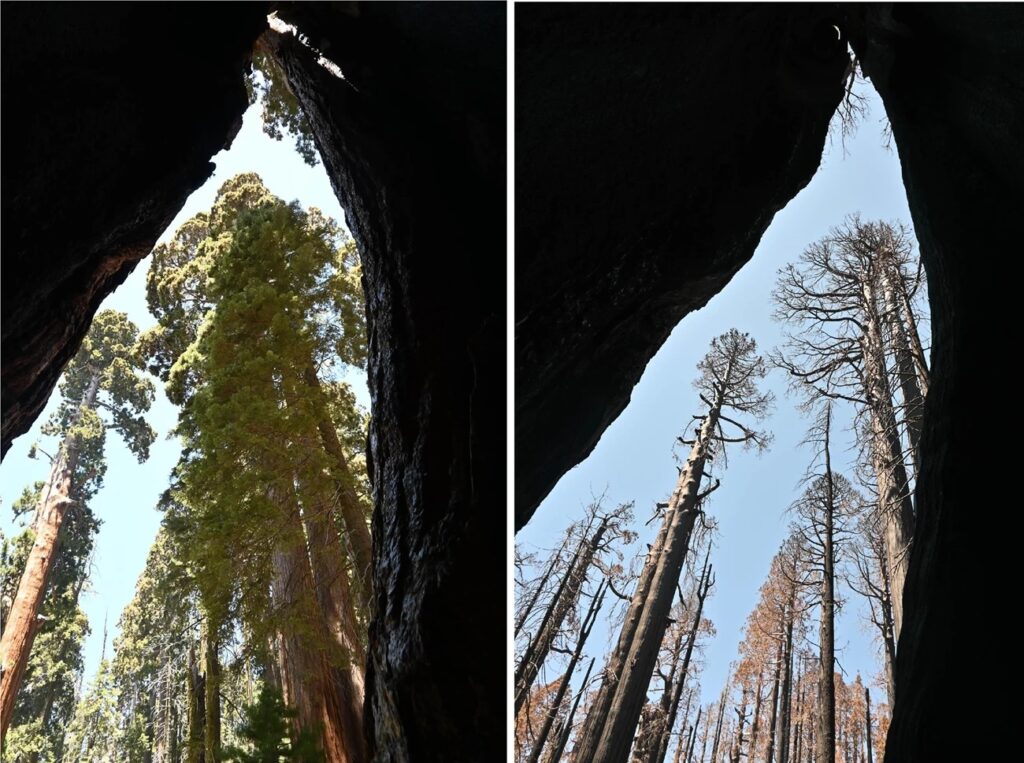
Two of those fires finished the argument Burnt Ridge started. In 2020 the Castle Fire, part of the SQF Complex, burned more than 170,000 acres across the Giant Sequoia National Monument, Sequoia National Park, and surrounding lands. The National Park Service and USGS estimated this megafire killed 7,500 to 10,600 large giant sequoias, which is 10 to 14 percent of the entire world population of large sequoias in a single fire. Within the Castle Fire footprint itself, 31 to 42 percent of large sequoias died. The next year the Windy Fire burned roughly 97,000 acres, mostly on the Sequoia National Forest and the Tule River Reservation. Sampling of seven groves found 35 percent of large sequoias killed, and 92 percent mortality in the patches that burned at very high severity.
Taken together with the 2021 KNP Complex, these fires killed close to 20 percent of the world's mature giant sequoias in roughly eighteen months. Trees that had survived dozens of fires across two and three thousand years did not survive these ones, because these ones burned hotter than anything the groves evolved to take.
What the Forest Service — and physics — said would happen
The salvage debate at Burnt Ridge was narrow, but the science underneath it was not in dispute even then: Dead standing timber and a century of accumulated surface fuel make the future fire hotter, and a hotter fire kills the big trees instead of just clearing the small ones. The giant sequoia is the living proof of the distinction. Low-intensity fire is how the species reproduces. Heat opens the cones and clears the seedbed. High-intensity fire is how the species dies. The entire management project in these groves is to keep fire in the first category and out of the second, which means reducing the fuel that lets a ground fire climb into the canopy.
The evidence came in after the fact and it was unambiguous. In the Castle Fire, giant sequoia groves that had been thinned and treated with prescribed fire over the preceding decades suffered roughly half the mortality of untreated groves nearby. The treatment worked. There was simply far too little of it, across far too few acres, delayed across far too many years. One 238 acre project would have helped, but likely wouldn't have prevented the loss of sequoias on its own. The real losses came from the projects that were never proposed, drawn up, analyzed and approved. Because what's the point, if even the smallest projects designed to comply with streamlined regulations get challenged all the way to the Supreme Court.
The designation problem
Most of the sequoia groves that burned sit inside the Giant Sequoia National Monument, set aside in 2000 for the express purpose of protecting these trees. That is the bitter reality the monument shares with designated wilderness elsewhere in this series: the line drawn on the map to protect a place raises the legal and political cost of the active management that the place actually needs to survive a modern fire regime. Protection on paper and fuel reduction on the ground are not the same thing, and in the southern Sierra the gap between them is measured in thousands of dead trees that can't be replaced for generations. When you combine "protective" designations that prevent management with an army of lawyers ready to litigate even the smallest of projects, you end up with a forest of ancient trees that doesn't stand a chance. A sequoia grove does not care whether the fuel around it went untreated because of a monument proclamation, a settlement agreement, a failed Supreme Court case, or an agency conditioned to flinch. The fuel load is identical, and so is the outcome.
The precedent that made BRC membership more important
Almost every case in the NEPA Jail is a precedent that makes the next project harder. Burnt Ridge is the exception that affects many of BRC's cases. Summers v. Earth Island Institute is now one of the foundational standing decisions in environmental law, and it runs against the serial-litigation model. It holds that a group cannot challenge a federal land-management regulation in the abstract by pointing to its members' general intention to someday visit some national forest; there has to be a concrete, imminent, particularized injury tied to a real project. It reaffirmed, in the land-management context, the limits Justice Scalia had drawn in Lujan v. Defenders of Wildlife, and it struck down the nationwide injunction the lower courts had entered off the back of a single 238-acre sale.
That is a genuinely useful precedent for anyone defending active management, and it should be cited as one. But its own history is the caution. The decision that limited abstract, programmatic challenges was born from a project the litigants killed anyway, through an injunction and a settlement, before the standing question was ever resolved. Good law on standing did not save the Burnt Ridge acres, and it did not save the groves downhill from them. A precedent that makes it harder to sue in the abstract is worth having. It is not the same as saving old growth Sequoias.
The precedent set by Burnt Ridge case also emphasizes why it is important for organizations like BlueRibbon Coalition to maintain active membership programs. In order to have legal standing in court we need members with definable interests in recreating on public land. When you become a member of BRC it enables us to represent you in court where we can push back against the serial litigation that is locking you out of your public lands and sentencing our forests to death by wildfire.
The NEPA Jail record we're keeping
Burnt Ridge is not an aberration. It is one case in a growing ledger of fuels, salvage, and forest-health projects that the Forest Service designed and then abandoned under litigation pressure while the untreated fuel loads waited for a spark. That ledger is why the BlueRibbon Coalition built the NEPA Jail, a tracker documenting the treatments stranded between approved and implemented.
Burnt Ridge is in it — a project the litigants took all the way to the Supreme Court, lost, and still managed to bury. The trees it concerned are in it too, in a sense no tracker can hold: 7,500 to 10,600 of them in one fire, up to a fifth of the world's ancient giant sequoias in less than two years. It's hard to call the five groups that authored this outcome "environmentalists," so let's stop calling them that.
When litigation overrides the judgment of the foresters who tend these lands, someone pays, and it is not the litigants. Here, the bill was paid by trees that had stood since before Rome, in the one place on the planet they grow.
*If you appreciate articles like this and our NEPA Jail tracker holding these anti-management organizations accountable, consider becoming a member of BlueRibbon Coalition today. It takes a team of people to investigate, research, write, advocate, and litigate for our right to protect and access our public lands.