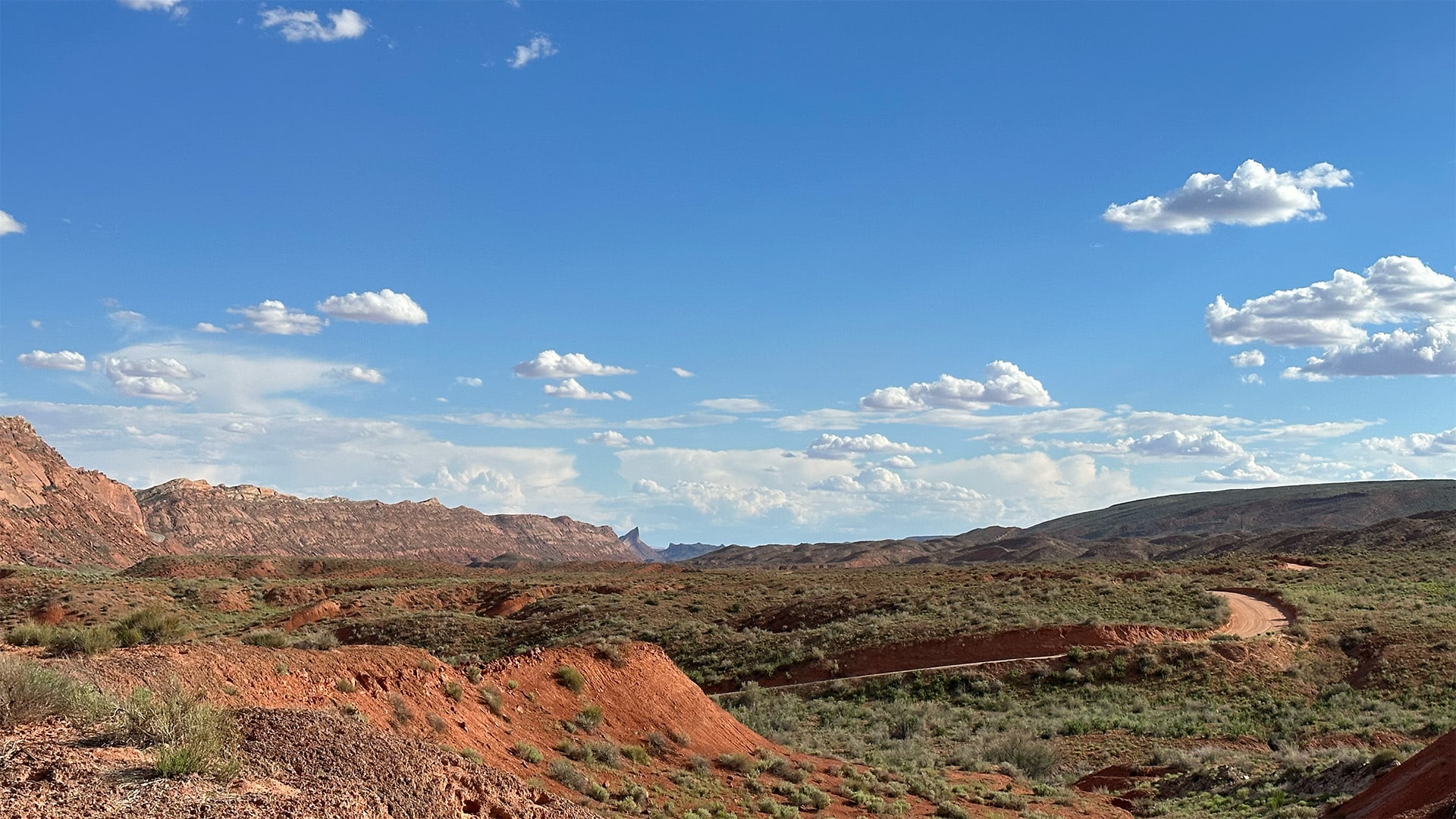

The Bureau of Land Management has approved the SR9 Camping Management Plan in southwestern Utah, closing free, dispersed campsites across nearly 14,000 acres of public land outside Zion National Park. In their place, the BLM plans to build two developed campgrounds at Flagstone Quarry and Gooseberry Mesa, complete with designated pads, concentrated use areas, and the infrastructure for future fees. Existing campsites that families, overlanders, and OHV riders have used responsibly for decades will be closed and "restored," a process that often involves heavy equipment and causes more ground disturbance than the campsites themselves ever did.
We warned that this might happen…
Back in December 2025, BlueRibbon Coalition sounded the alarm when the BLM released its Environmental Assessment for the SR9 corridor. Hundreds of our members submitted comments opposing the restrictions. We laid out clear, substantive arguments for why free dispersed camping should remain open, why designated campgrounds should supplement access rather than replace it, and why this proposal would hurt the very public the BLM is supposed to serve.
The BLM moved forward anyway.
That is not a reason to stop showing up. It is exactly the reason to keep showing up. Public comment creates a documented record. When agencies ignore thousands of substantive comments, that record becomes the foundation for legal challenges, congressional oversight, and future administrative review. Every comment you submit through BRC builds an independent paper trail that the agency cannot bury, undercount, or delay turning over. If this fight moves into court or onto a legislator's desk, your voice is already on file.
The agency that should be managing your public land is instead taking its cues from an anti-access organization...

The Anti-Access Playbook Behind the Decision
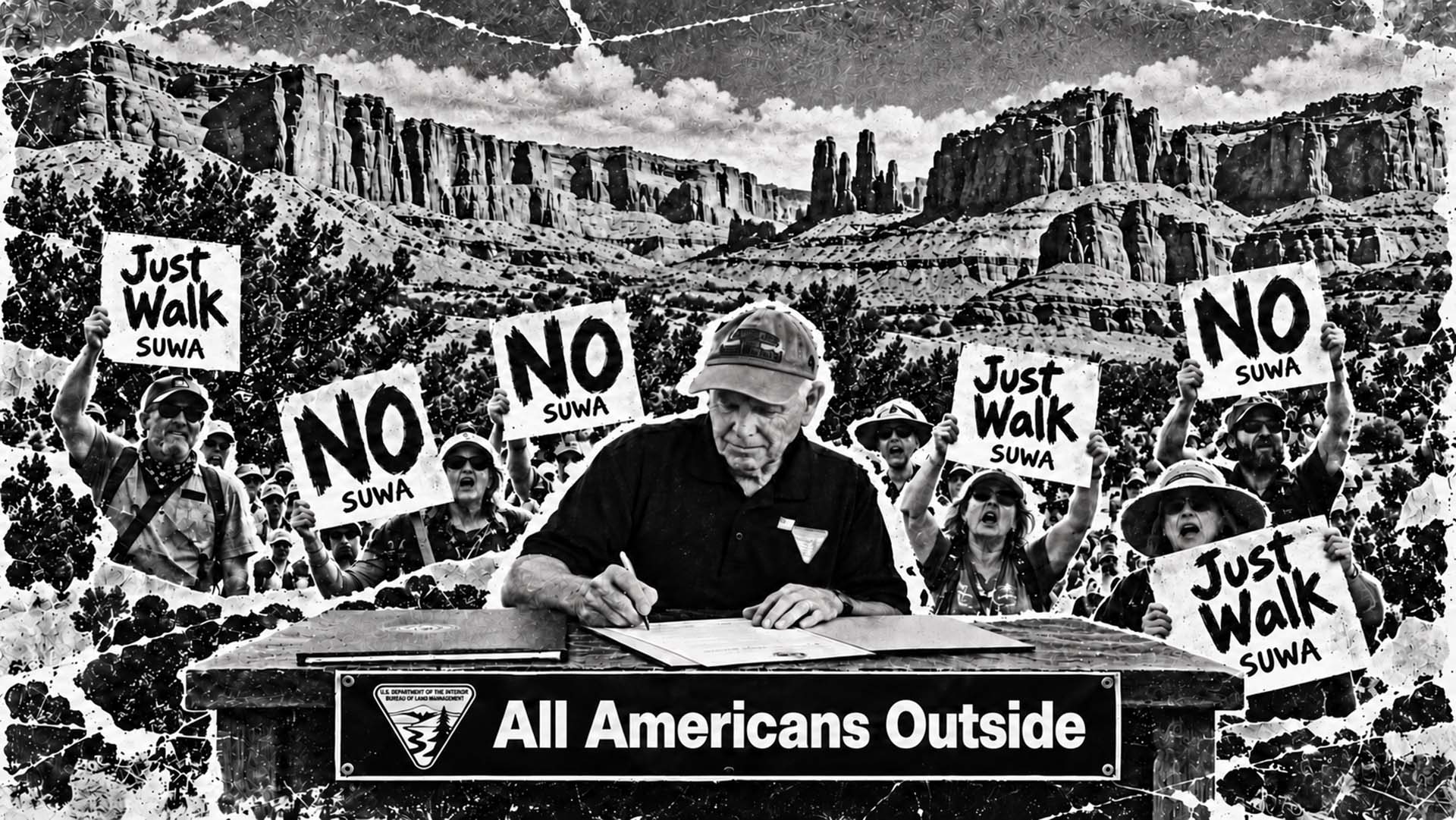
The BLM's justification for this closure leans heavily on ideas from a 2021 literature review commissioned and funded by the Southern Utah Wilderness Alliance (SUWA), an organization whose stated mission is to lock up millions of acres of public land in Utah through wilderness designations. That is not a neutral scientific body. That is an advocacy group with a clear political agenda that paid a researcher to produce a report aligned with its goals.
The report itself is a synthesis of general recreation ecology studies from around the world. It contains no original field data from the SR9 corridor. It includes no site-specific analysis of conditions along the Smithsonian Butte Scenic Byway, Gooseberry Mesa, or any of the areas now being closed. Its central recommendation, that land managers should concentrate visitors into previously impacted areas rather than allow dispersed use, reads like a policy prescription written for SUWA's benefit, not a scientific conclusion drawn from local evidence.
The report focuses almost exclusively on non-motorized recreation, which means it was not even designed to address the types of use most common in the SR9 corridor, including vehicle-based camping, overlanding, and OHV staging. Its broad generalizations about soil compaction, vegetation loss, and wildlife disturbance are drawn from studies conducted in ecosystems and climates that bear little resemblance to the Colorado Plateau.
And yet, since SUWA sent a formal letter encouraging BLM to follow the recommendations of this report back in 2021, it appears that BLM-Utah has adopted it as their official policy. We are losing our dispersed camping experiences because of a "study" paid for by an organization that benefits directly when dispersed camping is eliminated and public access is restricted.
A Pattern, Not an Isolated Decision
If the SR9 decision were a one-time event, it would be concerning. But it is not a one-time event. It is a pattern, and the playbook is the same every time.
At the Wedge Overlook in the San Rafael Swell, the BLM closed 665 miles of motorized routes through its travel management plan, many of which led directly to popular dispersed campsites. Then, citing the resulting concentration of camping at remaining access points, the agency proposed closing those campsites too and replacing them with a 125-site pad-style campground. The Wedge Overlook proposal openly references the same SUWA-commissioned study as its scientific basis.
Outside Capitol Reef National Park, the BLM closed 612 miles of routes in one of the final actions of the previous administration. Those routes provided access to free dispersed camping at Beas Lewis Flat, one of the most popular primitive camping areas in the region. With those routes gone, the BLM then approved construction of a 45-site developed campground and restricted the surrounding area to designated camping only.
The sequence repeats. Close the routes. Wait for camping to concentrate at the few remaining access points. Cite the concentration as a problem. Close those campsites. Build a controlled campground. Lay the groundwork for future fees through Recreation.gov.
This is not crisis management. This is manufactured justification. The BLM creates the conditions it then claims to be solving, and the SUWA report provides the language to make it sound scientific.
Every campsite lost in this process is one that does not come back. The "restoration" is permanent. The closures are permanent. The developed campgrounds that are supposed to replace what was lost are not guaranteed, often underfunded, and may take years to build if they get built at all. The SR9 decision itself acknowledges that the planned campgrounds will only be constructed if future funding becomes available.


Why Free Dispersed Camping Matters
Dispersed camping is not a loophole or a workaround. It is a legitimate, long-standing, lawful use of public land that has been practiced by American families for generations. It provides something that no developed campground can replicate: the ability to camp where you choose, on land you own as a taxpayer, without a reservation, without a fee, and without being confined to a numbered pad in a parking lot.
For many users, dispersed camping is the only affordable way to access the outdoors. It serves hunters who need to stage near remote areas. It serves OHV riders who camp at trailheads. It serves overlanders who travel with self-contained rigs and leave no trace. It serves families on tight budgets who cannot afford $40 to $60 per night at a developed campground, assuming one even has availability. In peak season at popular destinations like Zion, developed campgrounds book out months in advance. Dispersed camping is the pressure valve that keeps the system functional for everyone.
Above all, free primitive dispersed camping connects us to our deepest roots of being a human living within nature.
BlueRibbon Coalition supports all camping styles. We are not opposed to developed campgrounds, designated sites, or managed recreation areas. What we oppose is the elimination of free, dispersed camping as the default trade-off every time an agency builds something new. Developed campgrounds should be built in addition to dispersed camping opportunities, not at their expense.
The number of free dispersed campsites on public land is shrinking. SR9 is not an isolated event. It is one more cut in a strategy designed to eliminate dispersed camping entirely, one corridor at a time, one overlook at a time, one field office decision at a time. If we let them take these sites without a fight, there will be nothing left to fight for.
What You Can Do Right Now - Impact Statements
The decision has been signed, but this fight is far from over. BlueRibbon Coalition is actively exploring every available avenue to challenge this closure, including administrative appeals, congressional engagement, and legal review. To build the strongest case possible, we need something only you can provide: your story.
We are collecting adverse impact statements from anyone who has camped in the SR9 corridor. If you have used these dispersed campsites, whether once or for decades, your firsthand account matters. These statements will help BRC document the real-world consequences of this decision and demonstrate the scope of public harm as we determine the best path forward to fight it.
Haven't camped in the SR9 area? Send this article to someone who might have!
What Makes a Strong Impact Statement
Federal agencies and courts give the most weight to statements that are specific, personal, and factual. A strong impact statement is not a general opinion about public lands policy. It is your account of how this specific closure affects you. Here is what to include:
Your personal connection to the area. When did you first camp in the SR9 corridor? How often do you return? Is it part of an annual trip, a family tradition, or a regular stop on a longer route?
How you used the dispersed campsites. Did you stage for OHV riding, overlanding, mountain biking at Gooseberry Mesa, or an excursion into Zion National Park? Did you camp as a family?
What this closure means for you specifically. Will you lose access to an affordable camping option near Zion? Are you unable or unwilling to pay for a developed campground? Does the closure eliminate the type of experience you were seeking, such as solitude, flexibility, or proximity to trails?
Economic impact. Did you spend money in nearby communities like Springdale, Hurricane, or La Verkin when you camped in the area? How much, and how often?
Accessibility considerations. Did the dispersed sites accommodate needs that a developed campground cannot, such as larger rigs, group staging, or accessible terrain for those with mobility limitations?
Be honest and specific. Use real dates, real locations, and real dollar amounts where you can. A statement that says "I camped at Gooseberry Mesa every April for 12 years with my family and we spent roughly $200 per trip in Springdale" carries far more weight than "I love camping on public land." Agencies and courts look for documented, individual harm. Give them yours.
Do not wait. The sooner we build this record, the stronger our position. Every statement submitted through BRC becomes part of an independent record that we control and can deploy when the time comes.
Suggestion: craft your statement in a word processor (like Google Docs or Microsoft Word) and then paste it in the form below.