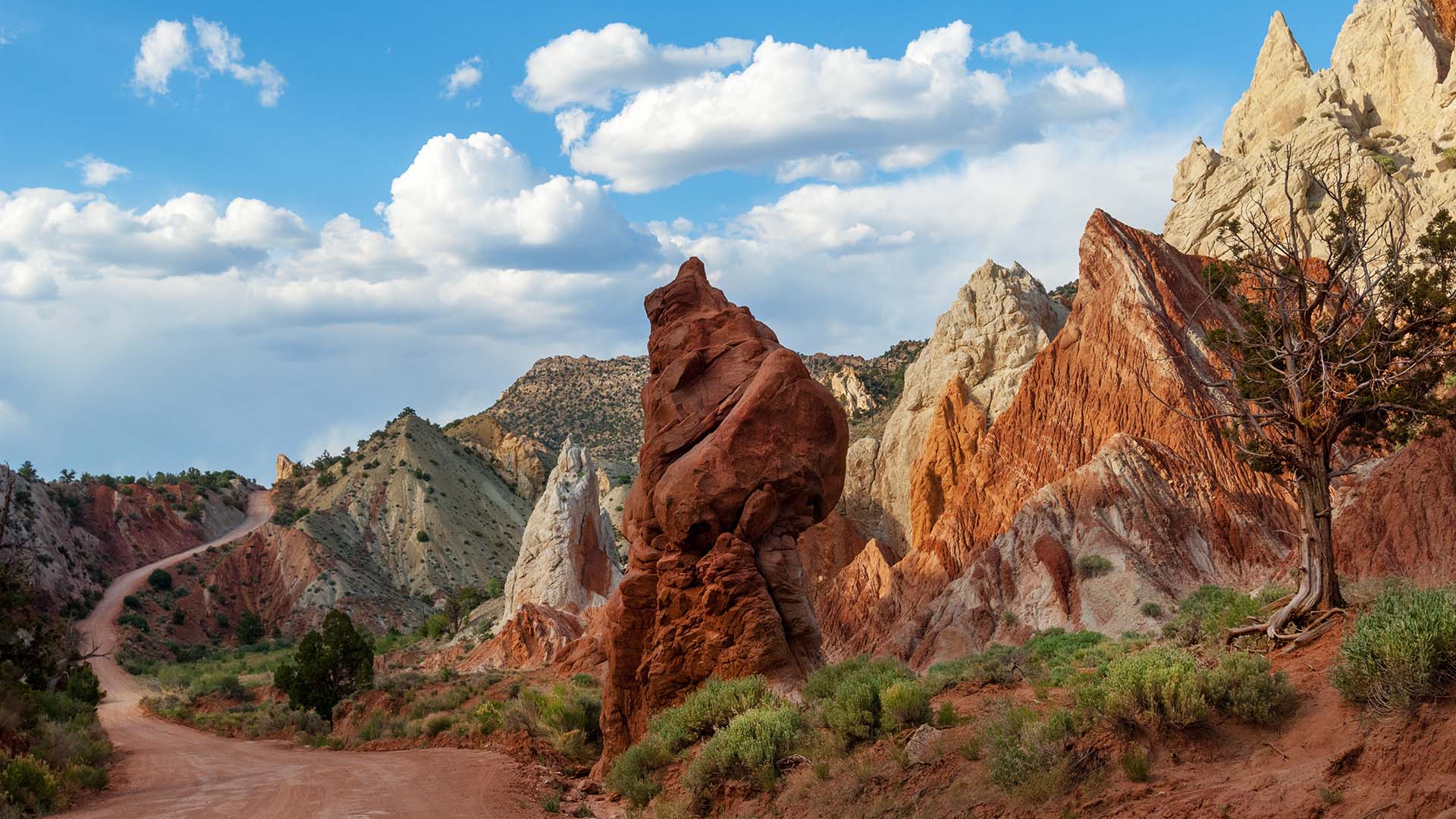
Today President Trump signed a pair of proclamations reducing the Bears Ears and Grand Staircase-Escalante National Monuments — removing a combined 3 million acres from monument designation, according to the administration. He signed the orders in the Oval Office surrounded by Utah's entire congressional delegation, Gov. Spencer Cox, and House Speaker Mike Schultz.
This is the news our members — and the rural communities, ranchers, miners, and recreationists harmed by these sprawling designations — have been waiting for. For nearly three decades, presidents have used the Antiquities Act to lock up millions of acres of multiple-use public land without a single vote in Congress. Today, a large piece of that overreach was rolled back.
"I'm very happy about this, and it's better than the first time," Trump said.
BRC Executive Director Ben Burr put the significance plainly: "Right-sizing these monuments to what the statute actually allows isn't an attack on public lands; it's how we keep them open for all Americans to enjoy."
We're still waiting on details
The proclamations reduce the boundaries, but the new maps and legal descriptions have not yet been released. We don't yet know precisely which acres, trails, and access points return to multiple-use management. The moment we have the boundary data and maps in hand, we'll break it down for you right here. Check back — we will update this page as we learn more.
Why the fight isn't over
We've been here before. Trump reduced these same two monuments in 2017. President Biden reversed him in 2021 with the stroke of a pen — and then expanded them even further. An executive action can be undone by the next executive action. That is exactly why BlueRibbon Coalition has carried this fight into the courts, where a win can actually last.
As Ben Burr said today, this is a fight BRC intends to finish: "We plan to continue fighting in the courts and in the Congress to ensure that abuse of the Antiquities Act becomes a thing of the past."
And the ground has shifted in our favor. On June 23, the Tenth Circuit Court of Appeals confirmed what BRC has argued all along: presidential monument designations under the Antiquities Act are subject to judicial review. That decision opened the courthouse doors. Pairing today's reductions with durable legal precedent is how we make sure a future administration can't simply redraw the lines and start over.
Make no mistake — the other side is already mobilizing. The Southern Utah Wilderness Alliance has vowed to sue to reverse today's reductions. That is precisely why our legal fund matters: this will be won or lost in court, and it could ultimately reach the U.S. Supreme Court. Chief Justice John Roberts has already signaled that the Antiquities Act is ripe for review, observing that its "smallest area compatible" limit has, somewhere along the way, stopped functioning as any meaningful restraint. That is exactly the argument BRC has been making for years.
This fight also extends well beyond Utah. BRC remains an active plaintiff in Torongo v. Burgum, our challenge to the 624,000-acre Chuckwalla National Monument in California — where we are pressing the same core principle: the Antiquities Act was written to protect the smallest area necessary, not to fence off entire landscapes.
What you can do right now
Fund the fight. Federal litigation is what turns a proclamation into permanent, court-tested protection for access. Donate to the BRC Legal Fund »
Take action. Tell the administration and Congress to bring every monument boundary back in line with the law. Add your voice here »
Spread the word. Share this update with your club and your networks. Every rider, rancher, and recreationist who understands what's at stake is another advocate.
Today is a win. Now let's make it last.
---
*This is a developing story. Last updated July 13, 2026. Check back for boundary maps and detailed analysis as it becomes available.*